 Visit Edinburgh Guide
Burke and Hare and the Anatomists: What the Record Says
The Burke and Hare Edinburgh story is sold every night of the week, in a lantern-lit version with sound effects, and the strange thing is how much better the documented version is. Two men killed a series of people in the West Port in 1828 and sold the bodies to an anatomist for dissection. One was hanged for it and one walked out of prison a free man. The anatomist who paid for the bodies was never charged with anything. And the objects that came out of it — a death mask, a pocketbook, a skeleton — are still in the city, in two working medical collections a five-minute walk apart, with labels rather than sound effects. This page sets out what the institutions themselves state, prints the figures that do not agree as figures that do not agree, and says which building holds what. Everything here was read on the institutions' own websites on 30 August 2026. It belongs alongside Surgeons' Hall Museums and Greyfriars Kirkyard, the two places where the story is physically kept, and beside what to do in Edinburgh.
Quick answer What is documented, what is contested, and which building holds which object
William Burke and William Hare killed a series of people in Edinburgh in 1828 and sold the bodies to the anatomist Robert Knox for dissection. Hare turned king's evidence and was never tried. Burke was convicted on 25 December 1828, hanged in the Lawnmarket on 28 January 1829, and — by the sentence of the court — publicly dissected afterwards. Knox was never charged. The number of victims is the one figure the institutions do not agree on: the University of Edinburgh says at least sixteen, the National Library of Scotland says over fourteen.
Key takeaways
- The objects are at Surgeons' Hall Museums — the pocketbook said to be made from Burke's skin, and his death mask — for £10 (about $13.60), seven days a week, last entry 16:30
- The skeleton is not there. It is at the University of Edinburgh's Anatomical Museum on Teviot Place, five minutes away, which is free but open on select days only with advance booking
- The cheapest way to see any of it is the museum's own Blood and Guts walk from £9.95, which includes free museum entry the same day — less than the £10 door ticket, and why that matters is the most useful line here
- The murders were in the West Port; the mortsafes that answered them are in Greyfriars Kirkyard, free and open at any hour
- The evening tours tell the story on the street rather than beside the objects — what they sell compares them, and the ghost tours page prices them honestly
What happened, in the order it happened
The trade came first and the murders came second, which is the part most tellings skip. Edinburgh's medical school was among the best in Europe and its anatomists needed bodies to teach with; the legal supply was tiny, and a market grew up around the gap. Resurrection men lifted the newly buried out of the city's kirkyards and sold them to the schools. That is why Greyfriars Kirkyard still has two iron mortsafes lying over graves near its wall: they were rented rather than bought, and they held a body in the ground long enough to spoil.
Burke and Hare did not rob graves. They produced the bodies themselves, in and around Hare's lodging house in the West Port, off the Grassmarket. The University of Edinburgh describes their method plainly: a suffocation that came to be called 'Burking' — pinching the nose shut and lying across the chest — chosen because it left no marks on a body that had to be sold as a specimen. The buyer was Robert Knox, who ran a private anatomy school and, in the University's own words, 'would be well paid' for what arrived at his door.
The National Library of Scotland dates the sequence to a ten-month window: 'Between January or February 1828 and 31 October 1828, over 14 murders took place in the old town of Edinburgh.' It ended with a police raid on 1 November 1828.
The trial, and the deal that decided it
The case against both men had a hole in it, and the Crown solved the hole by making one of them a witness. Hare was offered immunity from prosecution in exchange for testifying against Burke — turning king's evidence, in the language of the time — which is why only one man stood in the dock for killings that two men committed.
The trial opened before the High Court of Justiciary on Christmas Eve, 24 December 1828. In the National Library of Scotland's summary it 'began on Christmas Eve and ran without break until the jury delivered its verdict just under 24 hours later on Christmas morning'. Burke was found guilty on 25 December 1828 and hanged in the Lawnmarket on 28 January 1829. Hare was released from prison on 5 February 1829, where the Library notes he had been kept for his own protection. What became of him afterwards is not known: the Library sets out two competing accounts and says plainly that 'not much is known for sure'. We are not going to choose between them.
The three the record names
Everything above is written in numbers — sixteen, over fourteen, ten months — and that is the trouble with the way this story is told. The National Library of Scotland names three of the people: Mary Paterson, James Wilson, known in the West Port as 'Daft Jamie', and Margaret Docherty, the last. Those are the three Burke stood trial for. The rest were poor, transient or unmissed, which is why they were chosen, and the record does not carry their names because nobody in 1828 wrote them down.
That matters here more than it would elsewhere, because this page ends by sending you to look at human remains. The mask, the cranial cast and the skeleton are the remains of a convicted murderer, displayed by the sentence of a court. The people he killed have no objects, no graves and, in thirteen or more cases, no names.
The figures that do not agree
Five claims everyone repeats about this case, set against what the institution that publishes each one actually says. All of it was read on the organisations' own websites on 30 August 2026, and the last column is how this site prints each — which in two cases is 'not at all'.
| The figure | What the source actually says | Who publishes it | How we print it |
|---|---|---|---|
| The number of victims | 'killed at least 16 people' during 1827–1828 | University of Edinburgh, College of Medicine and Veterinary Medicine | Sixteen, described as a minimum, never as a count |
| The number of victims, again | 'over 14 murders took place in the old town of Edinburgh' between January or February and 31 October 1828 | National Library of Scotland | Printed alongside the sixteen, because the two do not reconcile |
| The size of the crowd at the execution | 'publicly hanged in the Lawnmarket in front of a large crowd' — no figure given | National Library of Scotland | No number. The figures in circulation come from broadsides sold on the day |
| What happened to Hare afterwards | Two competing accounts, and 'not much is known for sure about Hare's later life' | National Library of Scotland | As an open question, which is what it is |
| Knox's guilt | 'Robert Knox was never tried for his involvement in the murders' | University of Edinburgh alumni pages | As a fact about the record, not about the man |
Broadsides — the cheap single sheets printed and sold in the street as events happened — are where much of the popular detail originates. The National Library of Scotland holds them and describes them as a medium printers used to react to events in real time. They are wonderful evidence of what the city was told; they are not a record of what occurred.
The anatomist who was never charged
Robert Knox is the figure the story usually turns into a villain and the record refuses to convict. He was the busiest anatomy teacher in the city, he paid for the bodies that arrived at his rooms, and he was never tried for anything. He was not even called to give evidence at the trial.
The consequences he faced were professional rather than legal. The University's own account is unusually direct: his reputation in Edinburgh was severely damaged, the Royal College of Surgeons pressured him to resign as curator of its museum, and he was eventually pushed out by the medical establishment altogether, moving to London, publishing several books and dying in 1862. Whether he knew where the bodies came from is exactly the question the record cannot settle, and the honest position is that many contemporaries thought he had closed his eyes to what should have made him suspicious — a judgement about character rather than a finding of fact.
What the case did change was the law. The supply problem that created the market was addressed by Parliament with the Anatomy Act 1832, on the statute book as 1832 c. 75. It is the part of this story with the longest reach: after it, a body reached a dissecting room through a regulated route rather than through a bargain struck in a back court.
Why the anatomists mattered enough for any of this to happen
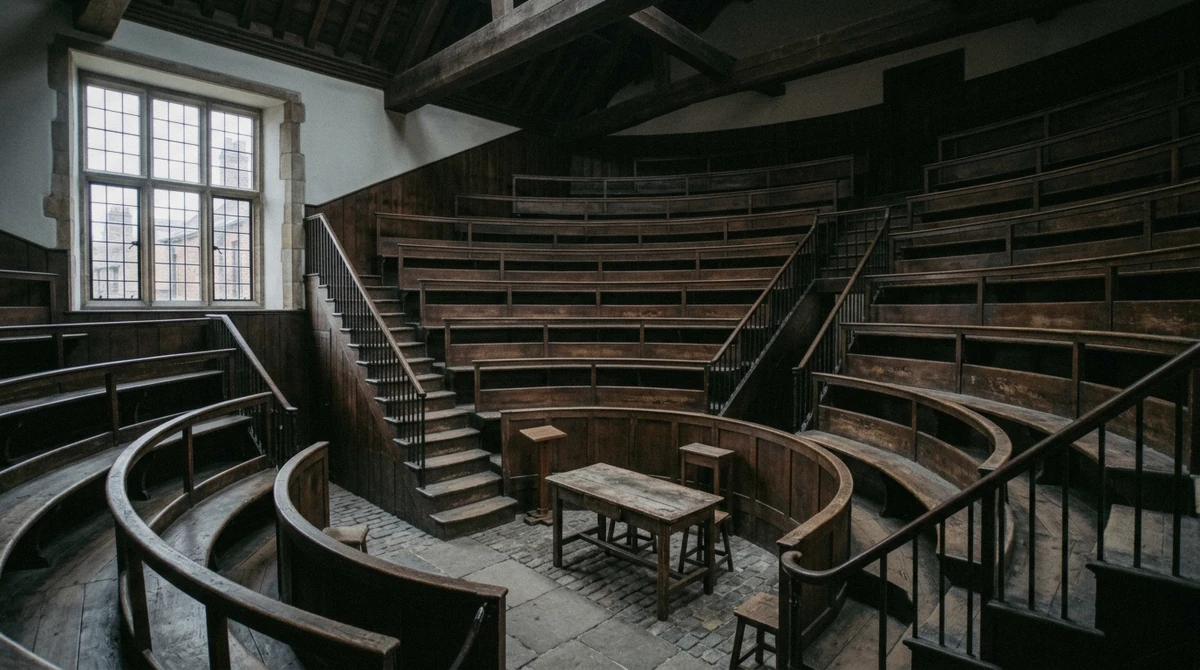
It is worth resisting the version where the doctors are simply the villains. The institution that received these bodies is the one that produced modern surgery a few decades later, and you can see both halves in one building: the History of Surgery gallery at Surgeons' Hall Museums runs from a barber-surgeons' guild founded in 1505 through James Syme operating before anaesthesia to Joseph Lister working out antisepsis and James Young Simpson finding what chloroform did. Its centrepiece is a recreated anatomy theatre staged on the first public dissection held in Scotland, in 1702.
The sentence: hanged, and then dissected
The court's punishment had a symmetry that was entirely deliberate, and it is the detail that makes this more than a crime story. The University of Edinburgh states the sentence in its own words: Burke was found guilty on 25 December 1828 'and hanged in the Lawnmarket on 28th January 1829, his sentence being that he be hanged and publicly dissected'. The man who had sold bodies to an anatomy theatre was sent to one.
After the execution the National Library of Scotland records simply that 'Burke's body was dissected and put on display', and that 'today his skeleton is kept at the University of Edinburgh's Anatomy Museum'. Every link of that chain is stated by an institution rather than by a guide. It also disposes of a question the search results ask constantly: William Burke has no grave and never had one, because the sentence removed the possibility of a burial — he was hanged, dissected in public, put on display, and his skeleton is still held by the University.
It is also the point at which a visitor should notice what is being asked of them. These are human remains, held by teaching institutions that now say openly that the ethics of holding them are unsettled. Surgeons' Hall carries a content advisory on every relevant page, and its current temporary exhibition — made with the University's own Anatomical Museum for 300 years of the medical school, running until Easter 2027 — describes itself as examining 'the shared challenges of who was excluded, the ethics involved in medical teaching collections and the challenges these present today in recognising the past'. Museums do not often write that sentence about themselves.
Where the objects actually are, building by building
This is where most retellings send people to the wrong door. Both halves were checked on the institutions' own websites on 30 August 2026.
Surgeons' Hall Museums, Nicolson Street. The museum's own gallery pages state that its displays explore the historical case of Burke and Hare and that what is shown includes a pocketbook said to be made from Burke's skin, and his death mask. Note the wording: said to be. That is the museum's own hedge and we keep it, because the attribution is tradition rather than settled fact. The material sits in the History of Surgery gallery, in a section about dissection used as a punishment, with labels rather than atmosphere, and the current temporary exhibition adds a cranial cast of Burke from the University's collection. Adult entry is £10 (about $13.60), open seven days a week from 10:00 to 17:00 with last entry at 16:30, and there is no online ticket — you buy at the Level 3 reception on arrival. The age guidance is 10 and over.
The University of Edinburgh's Anatomical Museum, Teviot Place. This is where the skeleton is, and the University says so in one sentence: the museum 'has one of the largest and best preserved collections of anatomy in Scotland, as well as the skeleton of the serial killer William Burke'. It is free. It is also not a walk-in: the University states that it is 'open to the public on select days only', with advance booking, and the rest of the time it is a teaching space with no visitor access. Its open days are published on the University's own page and change through the year, so we print no date that would be wrong by the time you read it.
So the practical summary. If you want the objects that are reliably on display on any day of the week, they are at Surgeons' Hall for £10. If you specifically want the skeleton, you need one of the University's open days, and the two buildings are five minutes apart.
The £9.95 that is cheaper than the £10
The single most useful fact for anyone chasing this story: the museum runs its own guided walk, Blood and Guts: The Twists and Turns of Edinburgh's Medical History, tickets start at £9.95, and the ticket includes free museum access from 10:00 to 17:00 on the day of the tour. A standard adult admission is £10 — so the guided walk with entry attached costs less than entry alone, and we checked both pages on the same day. It is led by museum staff from the College's own archives, runs 75 to 90 minutes through the medical Old Town, and Burke and Hare are on the route along with grave robbing and the first women in medicine.
Public departures are at 14:00 on Saturdays and Sundays until 29 November 2026, the age guidance is 10 and over, and the museum sells it only through its own Eventbrite page. Our Surgeons' Hall page has the conditions in full.
The addresses, and the one that is gone
People come to this story looking for a house, and there is no house. Hare's lodging house stood at the bottom of Tanner's Close off the West Port, and the City of Edinburgh Council's own image library holds a photograph of it captioned as demolished in 1902. The close went with it and the ground is built over; there is nothing to stand outside, which is why every walking tour tells this story somewhere else.
What you can still walk is the neighbourhood: the West Port runs west out of the Grassmarket, and the whole of it sits inside the Old Town within ten minutes of both museums.
What the evening tours sell, and where the record stops
The commercial version of this story lives on the street after dark, and it is a different product from the one in the museums — not a worse one, but a different one, and worth choosing deliberately.
The walking tours trade in the graveyard and the vaults. The two-hour dark-side walk at £17.60 (about $24) is a licensed guide over the witch trials, the public executions and the anatomists, entirely at street level, ending in Canongate rather than underground; it is rated 4.8 from 1,488 reviews. The vaults and graveyard tour at £21.06 (about $29) pairs the chambers under South Bridge with Greyfriars Kirkyard and is the busiest ghost product in the city, rated 4.6 from 7,268 reviews. A two-hour Old Town history walk at £16 (about $22) covers the same ground as history rather than as fright. None of the three includes museum entry, and none can show you an object.
Our own view, stated plainly: the museum and the kirkyard between them give you the documented version, and a tour gives you the telling. The £10 one is the one with the objects in it.
The honesty line worth holding on to is this: the murders happened in the West Port, not in the graveyard. Greyfriars is the body-snatching story — the mortsafes, the watchtower, the enclosed lairs built to keep the newly buried in the ground — and body-snatching is the trade Burke and Hare bypassed rather than the one they practised. When a guide slides from one to the other, that is a good story rather than a record.
What is tradition, labelled as tradition
Three things this page will not state as fact. That the pocketbook is made from Burke's skin — the museum says 'said to be', so we say 'said to be'. Any figure for the crowd at the execution — the National Library of Scotland says only 'a large crowd', and the numbers in circulation come from broadsides printed to be sold in the street on the day.
And anything about Hare's later life, which the same Library describes as unknown. Everything else here is a sentence some institution has published about itself.
The films, checked against the record rather than reviewed
Two films carry this story, and the question the search results ask is whether either is accurate. The Flesh and the Fiends (1960), John Gilling's version with Peter Cushing as Robert Knox, George Rose as Burke and Donald Pleasence as Hare, is the closer to the documented shape: it has Hare turning king's evidence and going free, and Knox facing public outrage and no charge — which is what the University of Edinburgh states happened.
Burke & Hare (2010), John Landis's black comedy with Simon Pegg, Andy Serkis and Tom Wilkinson as Knox, opens by telling you the events are true 'except the bits that are not', and it means it: its Burke goes to the scaffold having confessed to save the woman he loves. The record has no confession and no such bargain — it has a jury verdict on 25 December 1828 after a trial that ran under twenty-four hours from Christmas Eve, and the Crown buying Hare's testimony rather than Burke's conscience. The 2010 film does get the last fact right and says so in its closing credits: the skeleton is at the University of Edinburgh. Neither film is a source; both keep the immunity deal and the anatomist who was never charged, and invent around them.
The walks that cover this ground
Three tours that cross the anatomists' Edinburgh, none of which includes museum entry — the museum sells the only ticket that does. Prices, ratings and review counts are the operators' own in pounds, read on 30 August 2026.
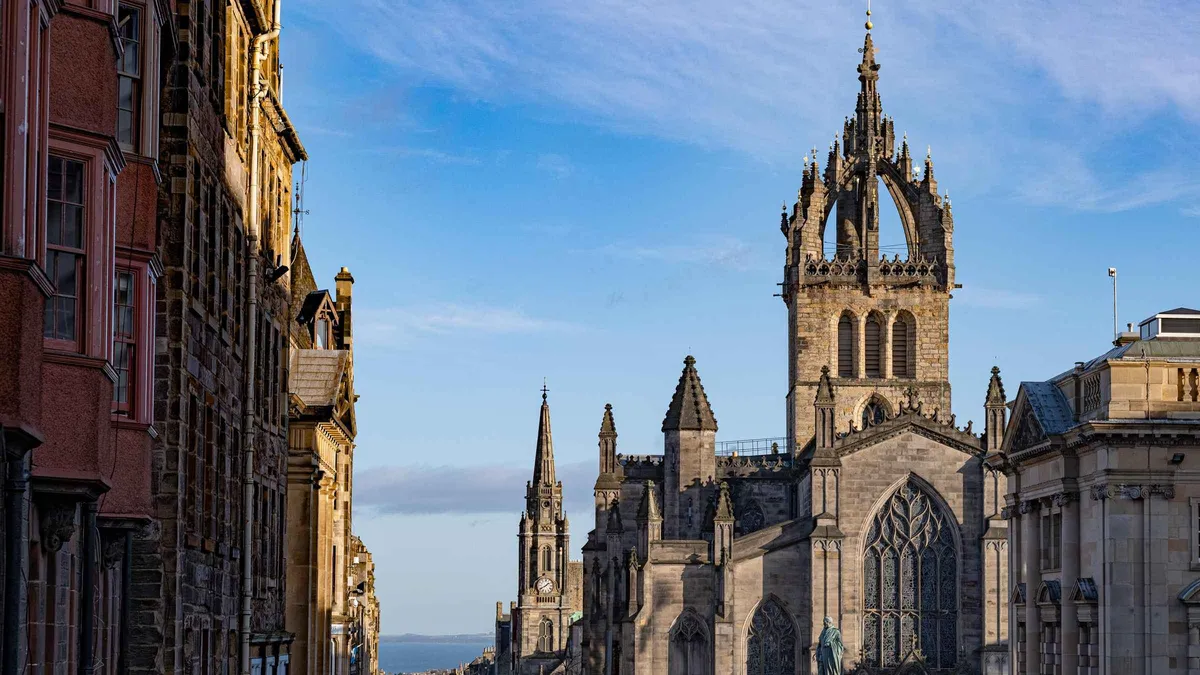 from £16
Edinburgh: Old Town History Walking Tour
The cheapest Old Town walk on the site, two hours past St Giles', Victoria Street and Greyfriars Kirkyard with the Greyfriars Bobby statue. Runs in four languages rather than English only.
Check Availability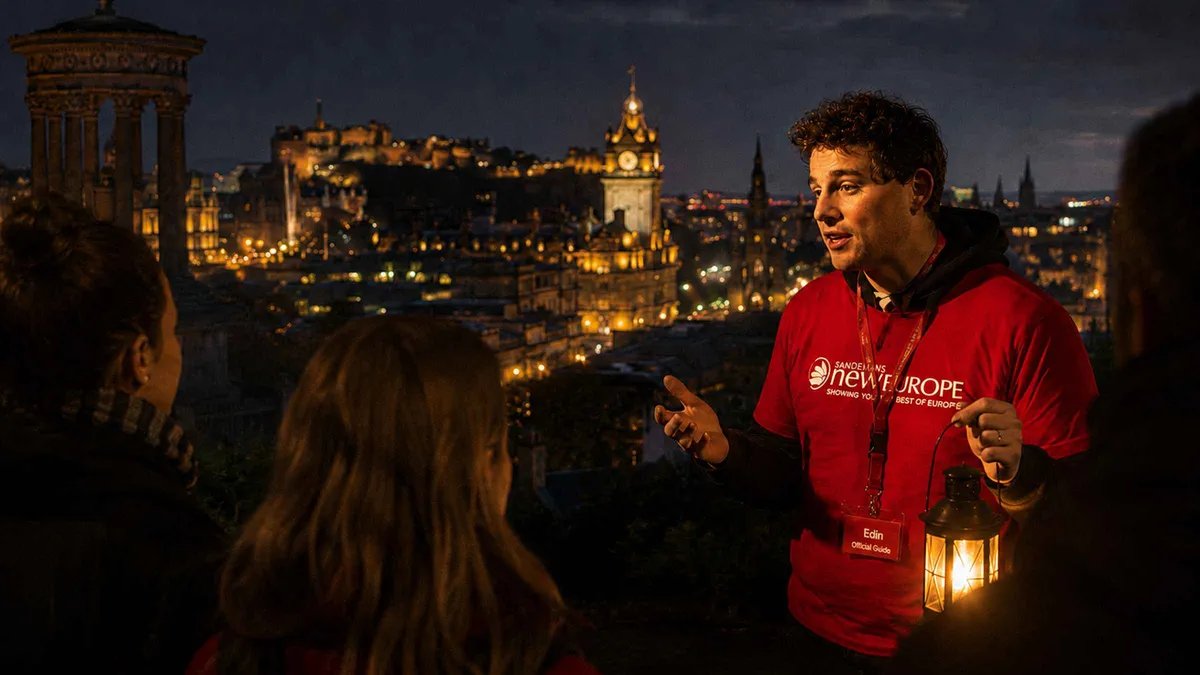 from £17.60
Edinburgh Darkside Ghost Tour of Mysteries Murder & Legends
A street-level dark-history walk that climbs Calton Hill and ends in Canongate Kirkyard, covering witch trials and the Anatomy Act. It talks about the vaults but does not go inside them.
Check Availability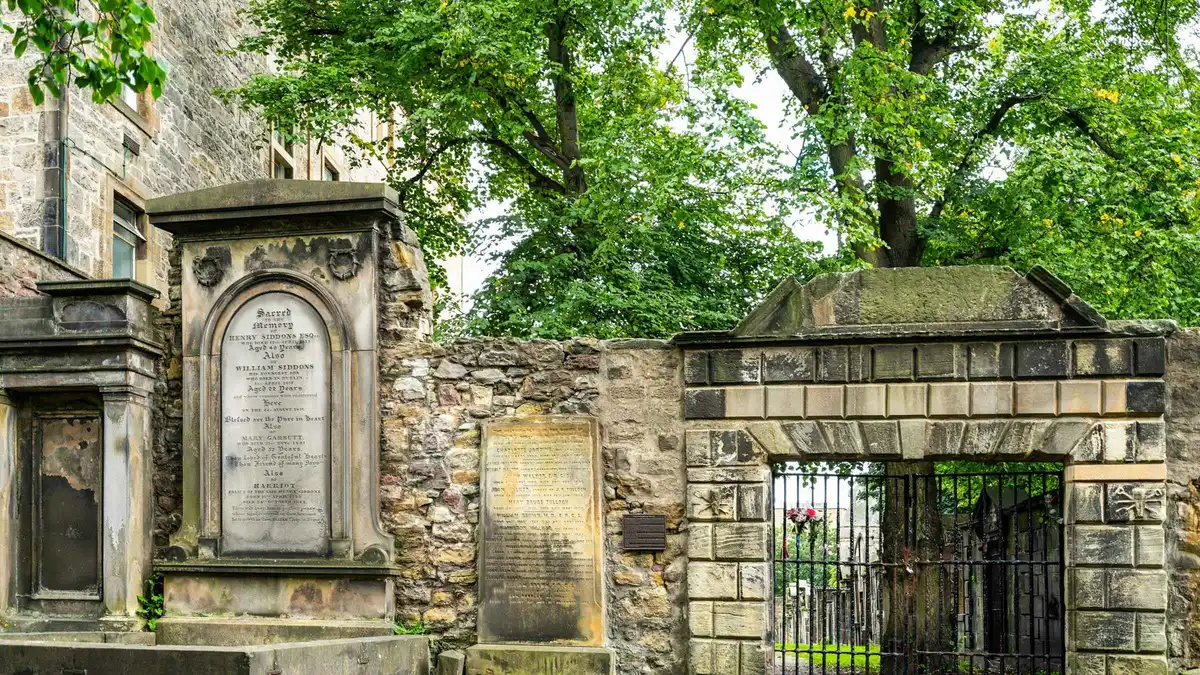 from £21.06
Edinburgh: Haunted Underground Vaults and Graveyard Tour
Adds Greyfriars Kirkyard and the Greyfriars Bobby legend to the same operator's vaults visit, over 90 minutes. Suggested for ages 12 and up; no torture exhibition on this route.
Check Availability from £19.44
Edinburgh: Underground Vaults Tour
An hour in the South Bridge vaults with the Burke and Hare murders and the witch trials, and the Torture Exhibition as a paid-up option. The shortest of the vault tours here.
Check AvailabilityPrices, ratings and details are the platform's own. Pound figures are the listed prices. The platform bills in your account's currency.
The questions the record can and cannot answer
How many people did Burke and Hare kill?
The institutions do not agree, which is itself the answer. The University of Edinburgh states that they 'killed at least 16 people' during 1827 and 1828. The National Library of Scotland states that 'over 14 murders took place in the old town of Edinburgh' between January or February and 31 October 1828. Sixteen is the figure most often repeated, and every source that uses it treats it as a minimum rather than a count — the table sets the two side by side.
Why was William Hare never punished?
Because the Crown bought his testimony. Hare was offered immunity from prosecution in exchange for giving evidence against Burke, which is why only one man stood trial for killings that two men committed. He was released from prison on 5 February 1829, having been held there for his own protection, and the National Library of Scotland says plainly that not much is known for certain about his life afterwards.
Was the anatomist Robert Knox ever charged?
No. The University of Edinburgh's own pages state that 'Robert Knox was never tried for his involvement in the murders', and he was not called to give evidence either. What he lost was professional: his reputation was severely damaged, the Royal College of Surgeons pressured him to resign as curator of its museum, and he left for London, where he published several books before his death in 1862. The section on Knox has the detail, and the case led to the Anatomy Act 1832.
Where is William Burke's skeleton kept?
At the University of Edinburgh's Anatomical Museum on Teviot Place, which describes its holdings as one of the largest and best preserved anatomy collections in Scotland 'as well as the skeleton of the serial killer William Burke'. Entry is free, but it is open to the public on select days only and requires advance booking; the dates are on the University's own page and change through the year. It is five minutes from Surgeons' Hall Museums, which holds the death mask and the pocketbook instead.
What is the death mask, and is the pocketbook really made from his skin?
The death mask is a cast taken from Burke's face, on display in the History of Surgery gallery at Surgeons' Hall alongside a pocketbook the museum itself describes as 'said to be made from Burke's skin'. That hedge is the museum's own and it is the correct one — the attribution is tradition carried forward with the object rather than something the collection asserts. The temporary exhibition also includes a cranial cast of him, until Easter 2027.
Did Burke and Hare rob graves in Greyfriars Kirkyard?
No — that is the confusion the evening tours often leave standing. Grave robbing was the established trade that supplied Edinburgh's anatomy schools, and Greyfriars Kirkyard still carries its defences against it: two iron mortsafes, the enclosed lairs along the south edge, and the watchtower. Burke and Hare bypassed that trade entirely by producing bodies at a lodging house in the West Port. The kirkyard is the right place to understand the market; it is not the crime scene.
The Case on Film, Told Three Ways
A documentary account, a short animated summary of the sequence of events, and a walk over the ground itself. Ids copied from our verified list and embedded without cookies.
Selling Bodies For Dissection: The Killings Of Burke & Hare
The documentary version, with historians on the anatomy trade that made the murders profitable in the first place.
Video: History HitThe Burke and Hare Murders
A short, clear run through the sequence of events — useful before a museum visit if you want the chronology straight.
Video: Simple HistoryEdinburgh: the Burke and Hare walking trail
The ground itself, filmed on foot, which shows how close the West Port, the kirkyard and the museums are to each other.
Video: The Wanderlust WayThird-party videos. Neither the channels nor the videos are connected to this site.