 Visit Edinburgh Guide
The Grassmarket, Edinburgh
The Grassmarket, Edinburgh's broad market square in a valley directly under the castle rock, is the one place in the city where you stand at the bottom of the cliff and look straight up at the fortress. It held a weekly market from 1477 until 1911, it was the burgh's public execution ground, and it is now a square of pubs, hotels and a Saturday market — which makes it the loudest address in the city on a Saturday night, a fact worth knowing before you book a room on it. This page covers what stands around the square, what happens on which day, and what it is like to sleep here. The wider plan starts on what to do in Edinburgh.
Quick answer Where it is, what happens when, what it costs
The Grassmarket is a broad open square at the south-west foot of the castle rock, in a valley well below the streets around it. It costs nothing to walk into, it holds a free market every Saturday from 10:00 to 17:00 all year round, and it was Edinburgh's public execution ground — the gallows site is marked in dark paving beside the Covenanters' Memorial.
Key takeaways
- Come on a Saturday if you want the market, a weekday morning if you want the square empty, and expect it to be loud until closing time at the weekend — the pubs and their hours are below
- It is the bottom of the hill: Victoria Street curves up from the north-east corner and Greyfriars Kirkyard is up Candlemaker Row from the east end, both two minutes away
- Most guided walks of the medieval city pass through here — a two-hour history and tales walk at £18 (about $24) is the cheapest way to have the square explained on the spot
What stands around the square, and when it is open
Everything in this table was read on 30 August 2026 from the operator's or venue's own website, or from The Gazetteer for Scotland, published by the University of Edinburgh and the Royal Scottish Geographical Society.
| What | Where on the square | When | Cost |
|---|---|---|---|
| Grassmarket Market | The central reservation, EH1 2JR | Every Saturday, all year, 10:00-17:00 | Free to walk round |
| Covenanters' Memorial and the gibbet paving | East end, on the old execution site | Open street, any hour | Free |
| The pubs on the north side | Grassmarket frontage under the rock | Maggie Dickson's publishes 11:00-01:00 seven days; the others do not publish hours we could read | Not published |
| Greyfriars Kirkyard | Up Candlemaker Row from the east end | Open to visitors 24 hours a day, 365 days | Free; the kirk itself asks for a donation |
| Edinburgh Castle | Straight up the rock, but 15 minutes round by road | Timed entry, sells out in advance | Paid — see the castle tickets page |
There is no business association publishing current market days for this district. The Greater Grassmarket improvement district's website refused the connection again on 30 August 2026, from two separate clients, as it did when this site's fact pack was compiled — so the market day above comes from the market operator's own page and nothing on this page is sourced to the BID. Where nobody publishes an hour or a price, the cell says so instead of carrying a figure from a blog. Dollar figures are approximations at £1 = $1.36.
Guided walks that use the Grassmarket
No tour is sold as a Grassmarket tour, because the square is free and open. These are the walks that cross it, meet near it or end at the graveyard above it. Every card links to the operator's own page, where the calendar shows what is still open; prices in pounds as listed on 30 August 2026.
 from £18
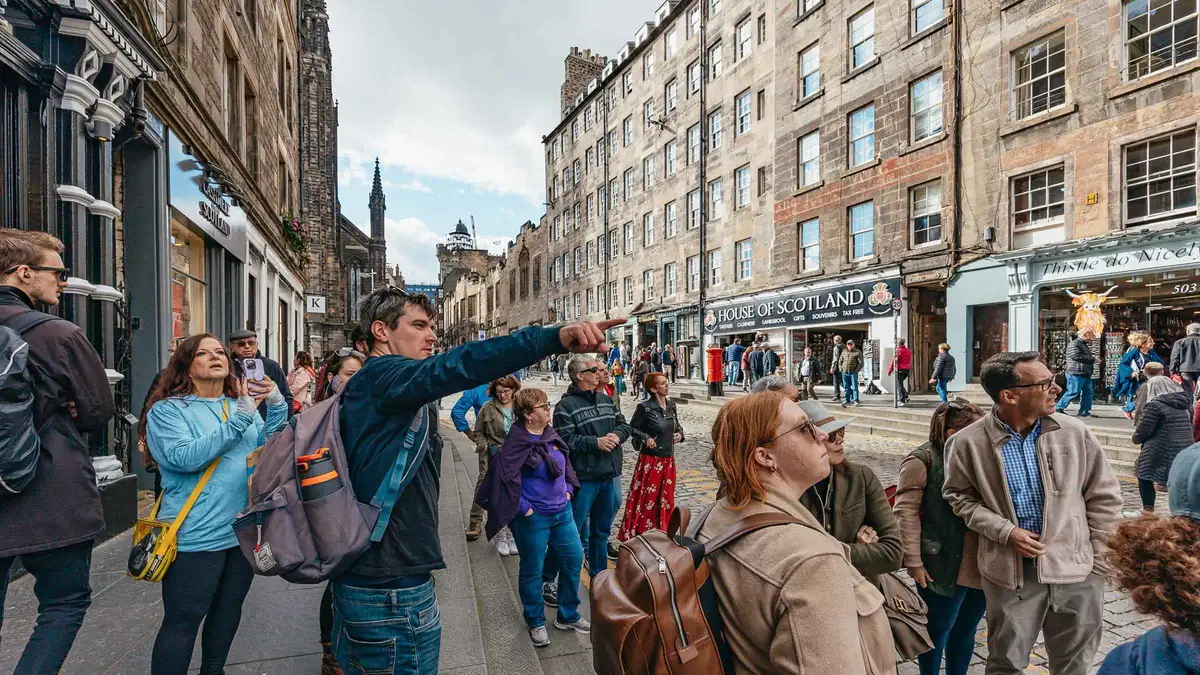
Edinburgh: Old Town History and Tales Walking Tour
Two hours through the UNESCO Old Town covering Mercat Cross, St Giles' and the Grassmarket, plus the Harry Potter locations. Ends in the centre near bars and transport; English only.
Check Availability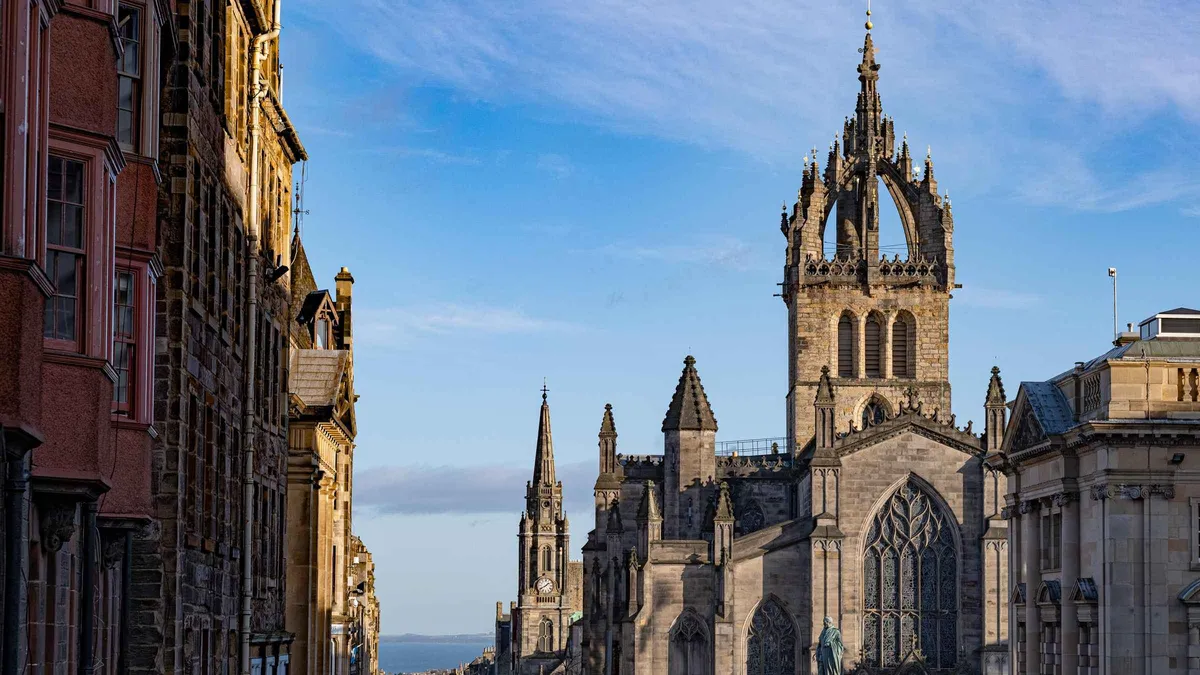 from £16
Edinburgh: Old Town History Walking Tour
The cheapest Old Town walk on the site, two hours past St Giles', Victoria Street and Greyfriars Kirkyard with the Greyfriars Bobby statue. Runs in four languages rather than English only.
Check Availability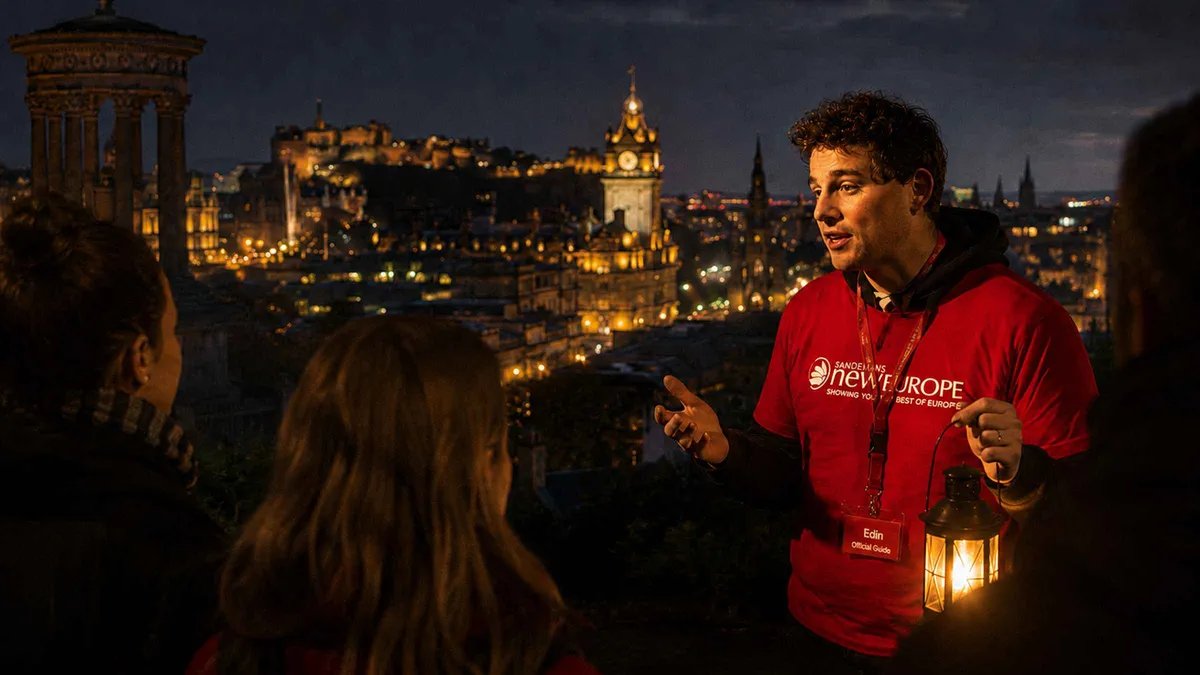 from £17.60
Edinburgh Darkside Ghost Tour of Mysteries Murder & Legends
A street-level dark-history walk that climbs Calton Hill and ends in Canongate Kirkyard, covering witch trials and the Anatomy Act. It talks about the vaults but does not go inside them.
Check Availability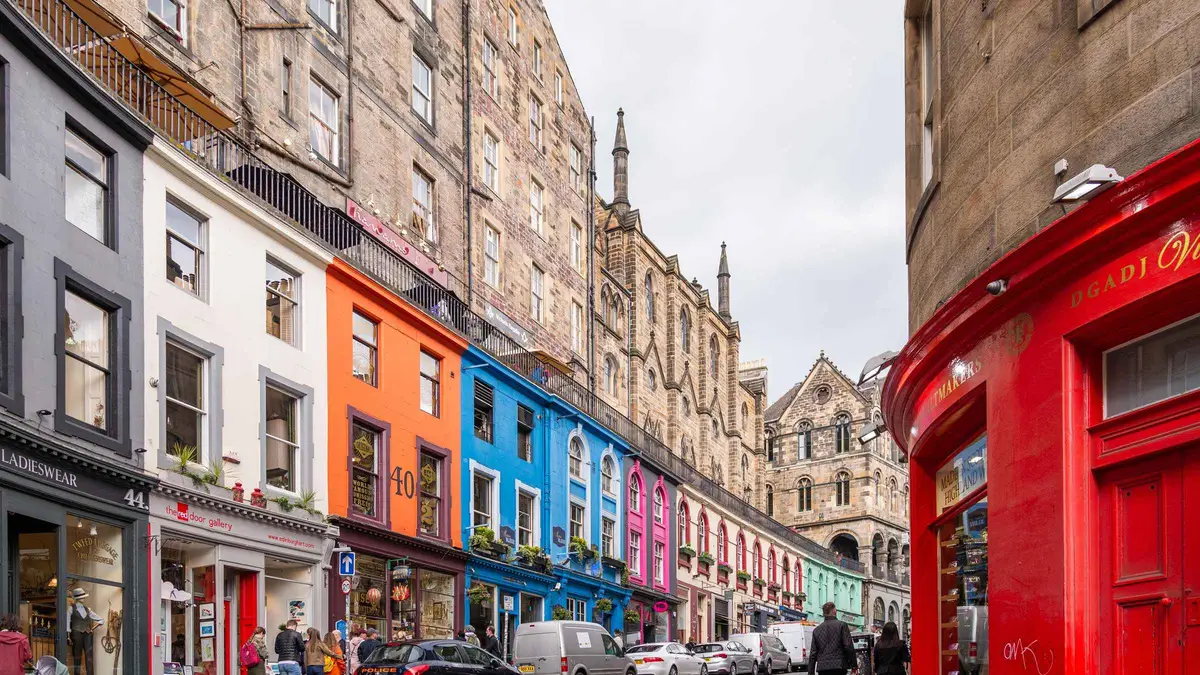 from £18
Edinburgh: Harry Potter Magical Guided Walking Tour
Two-hour walk between Greyfriars Kirkyard, Victoria Street and the Grassmarket, with a house-sorting quiz along the way. Runs in six languages, and the listing states plainly that no film scenes were shot in Edinburgh.
Check Availability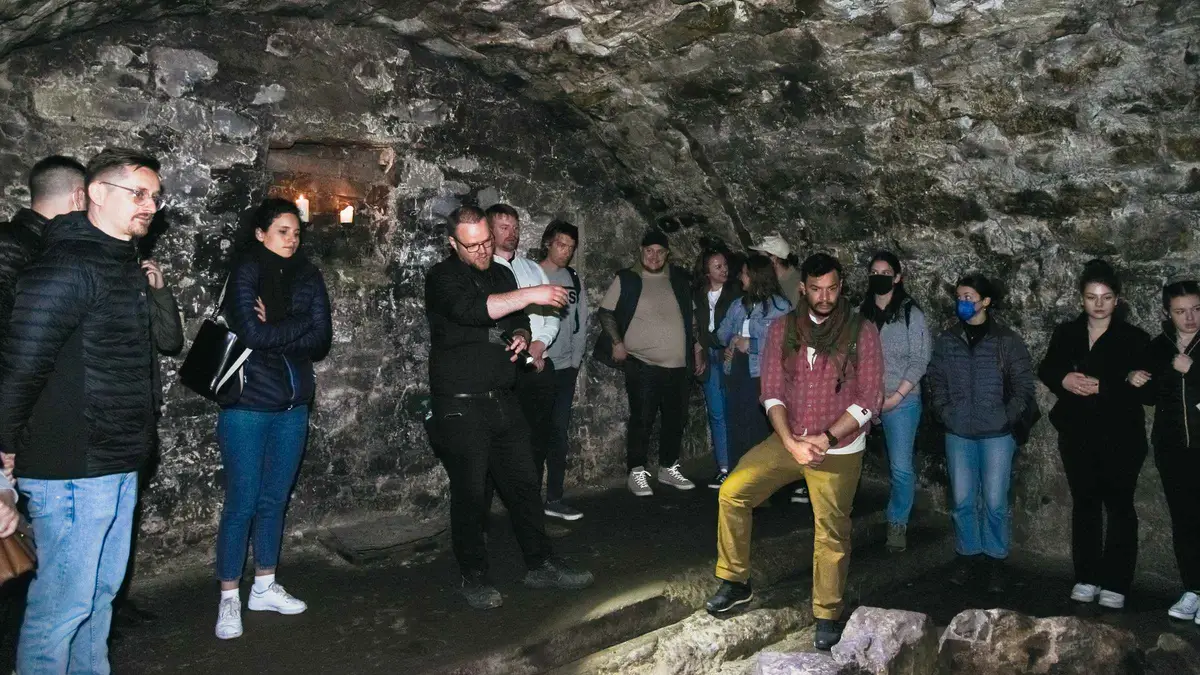 from £19.44
Edinburgh: Underground Vaults Tour
An hour in the South Bridge vaults with the Burke and Hare murders and the witch trials, and the Torture Exhibition as a paid-up option. The shortest of the vault tours here.
Check Availability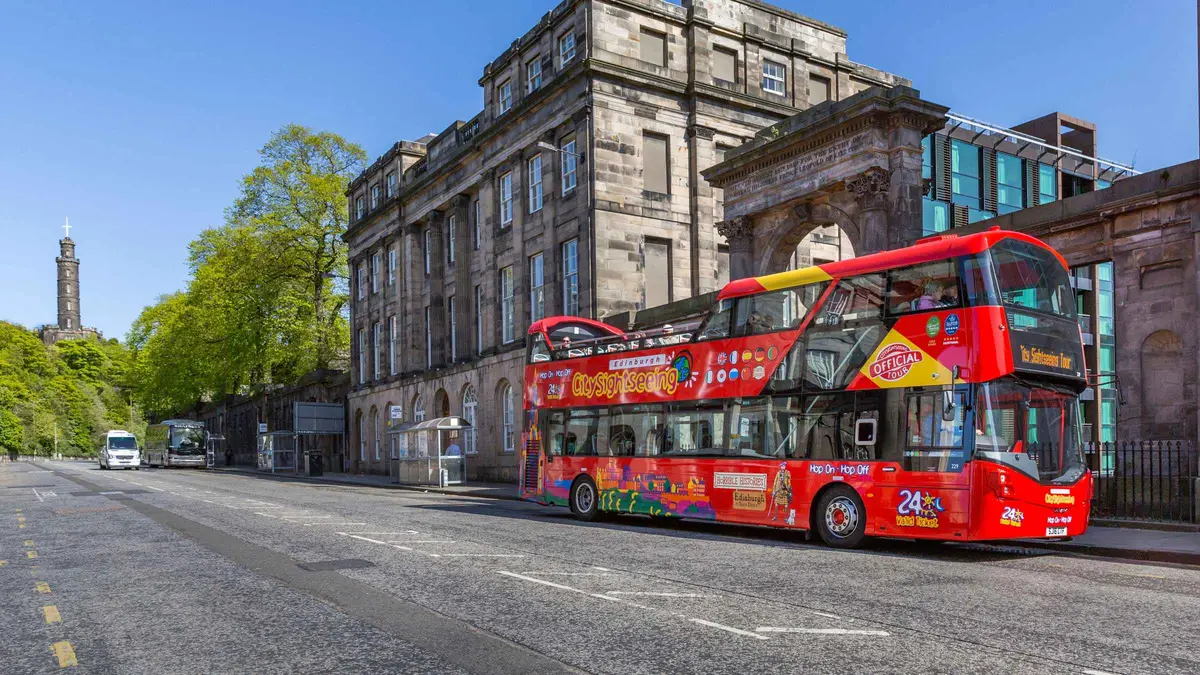 from £20
Edinburgh: City Sightseeing Hop-On Hop-Off Bus Tour
A single 24-hour ticket on one 70-minute loop of 15 stops, with a Horrible Histories children's channel. Up to three kids travel free per paying adult, which the multi-route passes do not offer.
Check AvailabilityPrices, ratings and details are the platform's own. Pound figures are the listed prices. The platform bills in your account's currency.
Why it is called the Grassmarket
The name is literal and it is about livestock, not lawns. This is the question the search results ask most often about the square, and the answer has a date attached to it.
The square first appears in the written record in 1363, in the Registrum Magni Sigilii Regum Scotorum, as "the street called Newbygging [new buildings] under the castle". From 1477 it was one of Edinburgh's principal market places, and part of it was given over to the sale of horses and cattle. The name appears to derive from the grazing pens that stood beyond its western end — the animals came in through the West Port, the gate in the Flodden Wall at the far end of the square, and were sold where you are now standing.
The Gazetteer for Scotland puts the run of the weekly market at 1477 to 1911, which is when the meat market closed and a new municipal slaughterhouse at Tollcross replaced the old shambles at the western end. Daniel Defoe, sent north as an English government agent in 1706, found two open-air markets working here at once: the Grass-market and the Horse-market.
The shape of the place is still the shape of a livestock market — a very wide street rather than a formal square, wide enough to hold pens and drovers, in a hollow that the surrounding city looks down into.
The streets that run off it
Knowing the four corners saves you a wrong turn, because the square is a crossroads pretending to be a destination. At the east end it meets Cowgatehead and the Cowgate, and Candlemaker Row climbs from the same corner towards the kirkyard — the row got its name in 1654, when the magistrates designated the street for candle-making.
In the north-east corner the West Bow curves up: that is the lower end of Victoria Street, the bend that everybody photographs. King's Stables Road leaves the north-west corner towards the castle's back approach and the New Town beyond. The West Port runs west, where the wall gate stood and where the Burke and Hare murders of 1828 mostly took place, in Tanners Close.
From the south-west corner the Vennel climbs in steps, and on its east side stand some of the best surviving stretches of the Flodden and Telfer town walls anywhere in the city. Go up it about thirty steps and turn round: that is the view of the castle that people come here for, and it is free.
The execution ground: what happened here, and what marks it
This square was where the burgh hanged people, and it does not hide it. The paving records the gallows and a monument records the dead, both of which stand in the middle of a place now full of outdoor tables.
Edinburgh World Heritage, the body that looks after the UNESCO site, dates the square's marketplace years to the 15th to 18th centuries and its use as a place of public execution to the 16th to 18th. The heaviest years were the 1680s, the period known as the Killing Time, when over a hundred Covenanters — Presbyterians who refused to accept the King's authority over their church — were put to death here for their faith.
They are commemorated by the Covenanters' Memorial at the east end, raised by public subscription in 1937 near the site of the gibbet, with the names recorded where they are known on a plaque beside it. Many of the same dead lie a hundred metres uphill in Greyfriars Kirkyard. The phrase that survives from that period is a sneer: when one prisoner refused to save himself by swearing loyalty to the Crown, the Duke of Rothes remarked that he had chosen to "glorify God in the Grassmarket".
The Porteous Riots, and the woman who survived the rope
In 1736 the square was the setting for the Porteous Riots, which ended with a mob lynching the captain of the Town Guard; a plaque near the execution site marks where. And the story every guide tells is Maggie Dickson's — a Musselburgh fishwife hanged here for concealment of pregnancy, whose family heard noises from the coffin on the road home and found her alive. Her sentence had been carried out, so under Scots law she could not be hanged again, and she lived another forty years. The date is not agreed even by good sources: Wikipedia's account puts the hanging in August 1724, while The Gazetteer for Scotland dates it to 1728. A pub on the square carries her name.
One date this page will not print as fact is the one repeated everywhere: that the last hanging in the Grassmarket was in 1784. We could find it on no official or institutional page in this run — not Historic Environment Scotland, not Edinburgh World Heritage, not the Gazetteer — so treat it as a commonly repeated figure rather than a verified one. What the authorities do state is the period: executions here belong to the 16th to 18th centuries, after which the city hanged people elsewhere.
Where to look for the marks
The 2009-10 streetscape scheme, which cost £5 million and turned the middle of the square into a pedestrian events zone, put the history into the ground rather than onto boards. Look for three things.
First, the "shadow" of a gibbet laid in dark paving on the former gallows site, next to the Covenanters' Memorial at the east end. Second, a strip of lighter paving running across the western end, which marks the line of the Flodden Wall from the Vennel on the south side to Granny's Green Steps on the north. Third, an inscribed flagstone in the central pavement in front of the White Hart Inn, marking where a bomb fell during the Zeppelin raid on the night of 2-3 April 1916; eleven people died in that raid on the city, though nobody at this spot.
None of this is signposted from a distance, and most visitors walk over all three without seeing them. The ghost and history walks that cross the square stop at each in turn, which is most of the argument for taking one.
Grassmarket market: which day, what is on it
One market day, every week, all year — and no official body publishes it except the operator that runs the stalls.
The Grassmarket Market runs on the central reservation of the square, EH1 2JR, every Saturday all year round, 10:00 to 17:00. It is free to walk round, the operator directs drivers to the NCP Castle Terrace car park, and there is a discount code for that car park collectable at one of the stalls if you have downloaded the NCP Park Pass app first.
The stall list is published weekly rather than fixed, and the operator prints it: the list for Saturday 29 August 2026, read the day after, ran to about thirty traders — pottery, jewellery, knitwear, leather, records and art, with hot food from a paella stand, a noodle stand and a hog roast, plus a bakery, a vegan bakery and an olive stall. It is a craft and street-food market, not a farmers' market and not an antiques market.
The same operator runs a market at Leith on one day and Stockbridge on Sundays, 10:00 to 16:00, so a weekend in the city can take in two without repeating stalls — the Stockbridge page has that one.
- Saturday only. There is no Sunday market here; Sunday is Stockbridge's day
- 10:00 to 17:00, all year, including through the festival month
- Free; bring a card, though several traders are cash-friendly
- The square stays open to pedestrians around the stalls, so the pubs and the memorial are reachable all day
Why no tourist board answers this question
The organisation that would normally publish market days, footfall and event listings for a district like this is its business improvement district. The Greater Grassmarket BID's website has refused every connection we have made to it — from two separate clients when this site's fact pack was built, and again on 30 August 2026 while this page was written.
That is why nothing here is sourced to it, and why the day and hours above come from the market operator's own page. If you are looking for an events calendar for the square — the Christmas period, festival month, the occasional street closure — the council's own listings and the venues themselves are what exist. It is a negative finding, but it is the honest answer to a question the search results ask constantly.
The pubs on the square: which is which
Naming a pub on this site requires a citable source, so the list below is the one published by The Gazetteer for Scotland — the reference work of the School of GeoSciences at the University of Edinburgh and the Royal Scottish Geographical Society — together with each pub's own site where it publishes hard facts. Their opening hours are mostly not published anywhere we could read, and the cards say so rather than guess. This is a description of what stands here, not a recommendation of where to drink.
-
Maggie Dickson's
Named for the fishwife who survived her own hanging in this square. Its own site publishes the hours, which is the useful part: the bar runs to one in the morning seven days a week, and it is on the north side under the rock, so it is one of the frontages that decides what a room across the square sounds like at midnight.
- Address
- 92 Grassmarket, Edinburgh EH1 2JR
- Hours
- 11:00-01:00, Monday to Sunday
-
The White Hart Inn
The oldest frontage on the square: an early 18th-century inn that claims to be the oldest public house in Edinburgh. Robert Burns stayed here on his last visit to the city in 1791, and William and Dorothy Wordsworth took rooms in 1803 — Dorothy's verdict, in her Recollections of a Tour Made in Scotland, was that it was "not noisy, and tolerably cheap", which is not a review anyone would write about the square today. The Zeppelin flagstone is in the pavement outside it. Hours are not published on any page we could read.
- Address
- Grassmarket, Edinburgh
-
The Last Drop
Named, with no delicacy at all, for the gallows that stood outside. The Gazetteer names it as one of the square's notable public houses and as a reminder of the executions; its own site was unreachable from here on 30 August 2026, so no hours are printed.
- Address
- Grassmarket, Edinburgh
-
The Beehive Inn
A 19th-century pub on the square, named by the Gazetteer alongside the White Hart as one of the two notable historic houses here. Hours not published on a page we could read in this run.
- Address
- Grassmarket, Edinburgh
-
The Fiddler's Arms
The Gazetteer's own description is the reason it is on this page: a 'local' with no concessions to tourists. On a square where most frontages are aimed squarely at visitors, that is a useful piece of information about which door to open.
- Address
- Grassmarket, Edinburgh
Not a ranking, and not a pub crawl. These are the houses named in a citable reference work for this square, checked on 30 August 2026, plus the one that publishes its own hours. Street numbers are printed only where a venue publishes one — the Gazetteer names the pubs without addresses, and this site will not invent a door number. The Grassmarket Community Project, a charity at grassmarket.org, also runs Coffee Saints on the square and is the substantial organisation actually publishing about this district.
The loudest street in the city, and what that means if you sleep here
People book hotels on this square because it is beautiful, central and under the castle. All three are true. So is the fourth thing, which the booking pages do not mention.
The Grassmarket has been a drinking street since it was a cattle market — it was where the coaches stopped when they came into the city from the west, and it has always been a place of taverns and temporary lodgings. Wikipedia's summary of the modern square is blunt: the area is, and always has been, dominated by a series of public houses, and the council has encouraged them to spill out onto the pavements.
That is the daytime charm and the night-time problem. One pub on the north side publishes closing at 01:00 seven days a week, and it is not the only late licence on the square; the 2009-10 improvement scheme deliberately widened the pavements for outdoor tables and created an events zone in the middle. On a Friday or Saturday the noise in the hollow bounces off the rock and the tenements, and it does not stop when the bars close, because the walk home for most of the square's customers is through the square.
This is not a reason to avoid the Grassmarket. It is a reason to ask for a room at the back, on a high floor, or on one of the streets running off it, and to be sceptical of a bargain rate on the square itself for a Saturday in August. If you want the address without the volume, the streets above — Candlemaker Row, Lauriston, the West Port — are two minutes' walk and a different acoustic world.
What else is on the square
Two large Apex hotels dominate the south side. One of them, the Apex International, opened in 1996 in the converted Mountbatten Building, put up in 1968 for Heriot-Watt University's electrical engineering, management and languages departments before the university moved out to Riccarton between 1974 and 1992 — which is why part of a medieval market square looks like a polytechnic.
Next to them stands Dance Base, the Scottish National Centre for Dance, built in 2001 behind a traditional frontage and running back up the slope of the castle rock in a multi-level design that won a Civic Trust Award and a Scottish Design Award in 2002. The rest of the frontage runs from the 17th century to the 21st, much of it rebuilt in the City Improvement Scheme of 1868 and filled in again in the 1920s with faux Scots Baronial blocks that were, in fact, council housing.
How long to spend here, and when to come
The Grassmarket is twenty minutes of looking and as long as you like of sitting. It is a stop on a walk, not a half-day of its own — unless you come on a Saturday.
Twenty minutes covers it: the memorial and the gibbet paving at the east end, the Flodden Wall strip at the west, the flagstone outside the White Hart, thirty steps up the Vennel for the castle view, and back. Add an hour for the market on a Saturday, or two for lunch outside on the one warm week Edinburgh gets.
The square works best as the bottom of a downhill route. Come off the ridge by Victoria Street or Candlemaker Row, cross the square, climb the Vennel or the Granny's Green Steps for the view back, and you have seen the castle rock from below, which almost nobody does. The other approach, from the National Museum of Scotland on Chambers Street, is five minutes downhill through Greyfriars.
It is also the one part of the medieval city with genuinely open space in it, which matters with children, with a wheelchair, or with anybody who has had enough of narrow closes. The pavements are wide and level across the middle; the routes out of it in every direction except east are not.
- Quietest: any weekday before 11:00, when the square belongs to deliveries
- Market day: Saturday, 10:00 to 17:00, all year
- Loudest: Friday and Saturday from about 18:00 until the bars close at 01:00
- Best light on the castle: late afternoon from the Vennel steps, when the rock is lit from the west
Getting here
There is no station and no tram. Walking is the answer for most people: it is about ten minutes downhill from the top of the Royal Mile by way of Victoria Street, five minutes from the National Museum, and fifteen minutes from Waverley station, all of it climbing on the way back.
Lothian buses run along the south side through the Cowgate corridor and along the West Port; a single is £2.40 (about $3.26) and the Tap Tap Cap day cap is £5.70 (about $7.75). The City Sightseeing hop-on hop-off route lists the Grassmarket among its stops, which is one way to arrive with your legs intact and £20 (about $27) lighter. The square sits inside Edinburgh's Low Emission Zone, and the nearest sensible parking is the NCP on Castle Terrace, which is where the market operator sends drivers.
Grassmarket map: the square and what is above it
The square, the market pitch on the central reservation, and the three things within five minutes of it. Coordinates come from Wikidata, from the Royal Mail postcode centroid for EH1 2JR, and from each venue's own listing.
Next stop from the Grassmarket
Walk minutes are our estimates from the distances; everything below starts from a corner of the square itself.
Victoria Street
The curved terrace that climbs out of the square as the West Bow — the most photographed street in the city and the reason many people are standing in the Grassmarket at all. The Victoria Street page has the shops and the times of day it is walkable.
The north-east cornerGreyfriars Kirkyard
Where many of the Covenanters commemorated on the square's memorial are buried. The kirkyard is open to visitors 24 hours a day, 365 days, and free; the kirk itself is a Fringe venue and closed to general visiting on many August days. A darkside walk at £17.60 (about $24) covers both the square and the graves.
Up Candlemaker Row from the east endEdinburgh Castle
You can see the walls from the market stalls and you still cannot get in from here — the entrance is on the Esplanade at the far end of the ridge. Entry is timed and sells out in advance; the castle page has the hours and the tickets page the options.
Straight up, but 15 minutes round by King's Stables RoadStaying in the Grassmarket: three addresses, three different nights
No nightly rate band was read for this district in this run, so none is printed — a band we cannot date is worse than none at all. What follows is what each address is actually like at midnight, which is the part that decides whether the room was a bargain. Every rate quoted anywhere in this council area now carries the 5% visitor levy on top.
The square itself
- Walking distance
- On the market pitch; 10 minutes uphill to the Royal Mile
- Suits
- A short trip, a view of the rock, people who are out until closing anyway
Two large hotels and several small ones face the pubs across the widest part of the square. The view is the best in the Old Town and the noise is the worst: bars run to 01:00 seven days a week and the walk home passes under your window. Ask for a room at the back or high up, and think twice about a Friday or Saturday in August. No nightly band was read for this page in this run. Edinburgh's 5% visitor levy applies to every paid overnight stay in the council area, capped at five consecutive nights.
See stays in The square itselfCandlemaker Row and Greyfriars
- Walking distance
- 3 minutes down to the square; 5 minutes to Chambers Street
- Suits
- The same location, a quieter acoustic, museum mornings
The short climb from the east end towards the kirkyard, above the noise line and still two minutes from everything. Small hotels and flats rather than big houses. No nightly band was read in this run; the 5% visitor levy applies here as it does across the council area.
See stays in Candlemaker Row and GreyfriarsThe West Port and Lauriston
- Walking distance
- 5 minutes to the square; 12 minutes to the castle esplanade
- Suits
- Value, a longer stay, arriving by car
West of the old wall gate, where the square runs out into a normal city street. Less charm, more room for the money, and the NCP at Castle Terrace is the nearest parking to any of these addresses. No nightly band was read in this run, and the 5% visitor levy is added to whatever you are quoted.
See stays in The West Port and LauristonNo nightly rate band was read for the Grassmarket on 30 August 2026 — this page prints what it verified and says plainly where it did not. Edinburgh's visitor levy, in force since 24 July 2026 and set by the Visitor Levy (Scotland) Act 2024, adds 5% to the accommodation cost of every paid overnight stay anywhere in the council area, is capped at five nights in a row, is charged at the same rate all year, and applies to UK residents and business travellers as well as to visitors from abroad. It even applies to bookings made from 1 October 2025 onwards for stays on or after 24 July 2026. The where to stay page compares this district with the rest of the city. We take a commission if you book through these links, at no extra cost to you.
Grassmarket questions
Why is it called the Grassmarket?
Because livestock were sold here. The square was one of Edinburgh's main market places from 1477, with part of it given over to horses and cattle, and the name appears to come from the grazing pens beyond its western end. Before that it appears in a 1363 record as "the street called Newbygging under the castle". The Gazetteer for Scotland dates the weekly market from 1477 to 1911, when the meat market closed. The history section above has the rest.
What days is the Grassmarket market on?
Saturday, every week, all year round, 10:00 to 17:00, on the central reservation of the square at EH1 2JR. It is free to walk round and the trader list changes weekly. There is no Sunday market here — the same operator runs Sunday in Stockbridge, 10:00 to 16:00. No business association publishes market days for this district; the Greater Grassmarket improvement district's website has refused every connection we have made to it, most recently on 30 August 2026, so the day above comes from the market operator's own page.
Where were people hanged in the Grassmarket?
At the east end, on the site now marked by the Covenanters' Memorial of 1937 and by the "shadow" of a gibbet laid in dark paving beside it during the 2009-10 improvement scheme. Over a hundred Covenanters were executed here in the 1680s, and Edinburgh World Heritage dates the square's use as a place of public execution to the 16th to 18th centuries. The commonly repeated claim that the last hanging was in 1784 appears on no official page we could read. A two-hour history and tales walk stops at the spot.
Is the Grassmarket noisy at night?
Yes, at weekends, and it is the main thing to weigh before booking a room on the square. The frontage is dominated by pubs — one publishes closing at 01:00 seven days a week — the pavements were widened for outdoor tables in the 2009-10 scheme, and the sound sits in the hollow between the tenements and the castle rock. A room at the back, a high floor, or an address on Candlemaker Row or the West Port solves it without moving you more than five minutes.
What is there to do in the Grassmarket?
Walk it in twenty minutes: the Covenanters' Memorial and the gibbet paving at the east end, the strip of lighter paving marking the Flodden Wall at the west, the Zeppelin flagstone outside the White Hart Inn, and thirty steps up the Vennel for the castle view. Add the Saturday market, a pub, and the climb to Greyfriars Kirkyard. Nothing on the square charges admission; the things to do list has the paid attractions within ten minutes of it.
How do I get to the Grassmarket?
On foot, for almost everybody: about ten minutes downhill from the top of the ridge by way of Victoria Street, five minutes from Chambers Street, fifteen from Waverley station and uphill all the way back. Lothian buses run along the West Port and the Cowgate corridor at £2.40 a single (about $3.26), the hop-on hop-off route lists the square as a stop, and the nearest car park is the NCP on Castle Terrace. There is no tram and no station.
Which pubs are on the Grassmarket?
The square has been dominated by public houses since it was a cattle market. The Gazetteer for Scotland names the early 18th-century White Hart Inn, which claims to be the city's oldest and where Burns stayed in 1791; the 19th-century Beehive Inn; The Last Drop, named for the gallows; Maggie Dickson's, named for the woman who survived her hanging here and open 11:00 to 01:00 seven days; and the Fiddler's Arms, which it describes as a local with no concessions to tourists. The cards above print each source and what it does and does not publish.
Where the Grassmarket fits in an Edinburgh day
Use it as the bottom of the hill. A morning at the castle, down through Victoria Street into the square for lunch outside, thirty steps up the Vennel for the photograph nobody else takes, then up Candlemaker Row to Greyfriars Kirkyard and along to the National Museum of Scotland, which is free and open every day. That is a full day within a few hundred metres, and only the first item on it needs a ticket.
If you are here on a Saturday, invert it: the market first, at ten, while the square is still walkable, and the climb afterwards. And if you are choosing where to sleep, read the noise section before the booking page's photographs make the decision for you. The neighbourhoods index sets this square beside the other districts worth a half-day, and the tickets hub compares the paid attractions above it.
The Grassmarket on film
Three walk-throughs filmed on the square. One of them is shot on a market Saturday, which is the quickest way to see whether the stalls are what you are hoping for before you plan a day around them.
Grassmarket Walking tour | Edinburgh | Scotland | Binaural | ASMR | 4K
A slow circuit of the square with no commentary — the frontages, the memorial and the castle rock above.
Video: Akyuka TravelGrassmarket Market, Edinburgh | Walking Tour | Scotland | ASMR | 4K
The Saturday market itself, stall by stall, which is exactly what the operator's weekly trader list describes in words.
Video: Akyuka TravelEdinburgh Grassmarket Walking Tour
The approach down from the ridge and out along the West Port, showing how the square sits in its hollow.
Video: Random Wanderings Travel, Transport and HistoryVideos load from YouTube only when you press play.
Prices, hours and terms are set by the venue or operator and confirmed at checkout.
We may earn a commission if you book through one of our links, at no extra cost to you. Full affiliate disclosure