 Visit Edinburgh Guide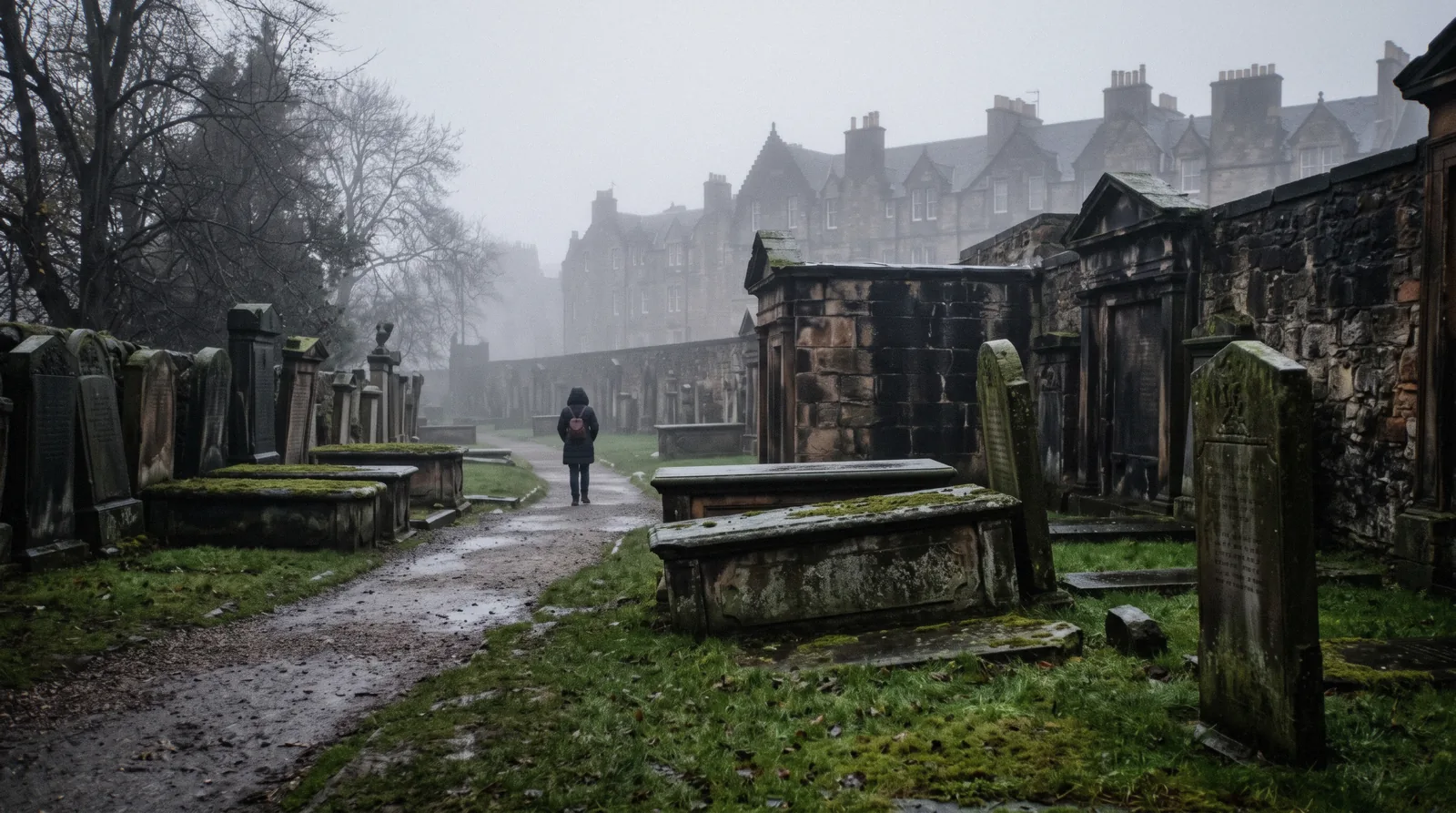
Greyfriars Kirkyard
Greyfriars Kirkyard is the walled burial ground behind Candlemaker Row where Edinburgh buried its dead from 1562, signed the National Covenant in 1638, penned 1,200 prisoners in 1679 and, two centuries later, acquired a small dog it has never stopped talking about. It is free, it belongs to the City of Edinburgh Council rather than the church, and its gates do not close: the kirkyard is open 24 hours a day, 365 days a year in the kirk's own words. The building in the middle of it keeps entirely separate hours and shuts for general visiting on many August days, because it becomes a Fringe venue. This page separates the two, says which corner is locked and how you get into it, and is straight about the parts that are folklore. It is one stop in our guide to Edinburgh attractions.
Quick answer Free, never shut, council-run — and one corner behind a locked gate
Greyfriars Kirkyard is free and never closes: the kirk's own visitor page says the kirkyard "is open to visitors 24 hours a day, 365 days", and it is owned and maintained by the City of Edinburgh Council rather than by the church standing in the middle of it. The kirk building is a separate visit with separate hours, free but donation-funded, and shut for general visiting on many days in August because it hosts Fringe shows. One part of the kirkyard, the Covenanters' Prison, has been locked since about 1990.
Key takeaways
- Do not rub the dog's nose. The statue outside the gate has been polished back to bare bronze by visitors doing it, the council has asked people to stop, and a 2013 repair was scrubbed off within days.
- The locked south-west corner is reachable, but only in the dark and only with a ticket: the operator that holds the key runs a 1 hour 20 minute tour at £13 (about $18), 12 and over, meeting up at the cathedral.
- The graveyard is on plenty of ghost walks and none of them goes into the locked part: the vaults and graveyard tour at £21.06 (about $29) and the two-hour Darkside walk at £17.60 (about $24) both stay on public ground.
- The Harry Potter name-hunting here is inference, not record — the graves are real and the connection is not documented. The Harry Potter hub has the tours that handle it honestly, and what is actually inside the kirk is more interesting than the headstones people queue to photograph.
Key facts
Opening hours
| The kirkyard, all year | Open 24 hours a day, 365 days |
|---|---|
| Greyfriars Kirk, the building | No hours published; open and closed days are listed one by one on its Visit page |
| The Kirk in August | Closed for general visiting on many days — it is a Fringe venue |
| Covenanters' Prison | Locked; reachable on a paid guided tour |
Closed None for the kirkyard. The kirk closes for general visiting on many August days and on any day it is hosting an event
Admission
- Adult
- Free — the kirkyard, the monuments, Bobby's headstone and the statue outside cost nothing at any hour
- Reduced
- Greyfriars Kirk: "Entry to the Kirk is free, although donations are encouraged and greatly appreciated." Its volunteer history tours are pay-what-you-can; a bespoke tour has a recommended donation of £10 a head (about $14)
- Free
- Everyone, always. The one charged thing here is the evening tour that holds the key to the Covenanters' Prison, £13 (about $18)
Planning it
- Time needed
- Not stated by anyone official. Our routing: 30 minutes for Bobby, the kirk and the east wall; an hour if you read the monuments
- Book ahead
- Optional — walk-up usually fine
- Address
- Greyfriars Kirk, Greyfriars Place, Edinburgh EH1 2QQ — the main gate is at the top of Candlemaker Row, beside the Greyfriars Bobby statue
Nothing here sells a ticket to the kirkyard, because nobody can: it is public ground, owned by the council and open at every hour — so this compares the ways people arrive instead. Venue figures come from greyfriarskirk.com and the operator's own booking site, read on 30 August 2026.
The kirkyard costs nothing at any hour, and no one sells a ticket to it. The only question here is whether you want a licensed guide's script over the ground, and which stretch of Old Town history that guide covers.
| Way in | Price | What it covers | Cancel | Book |
|---|---|---|---|---|
| Walk in through the gate, any hourFor anyone who simply wants to find Bobby's headstone, the Martyrs' Monument and the mortsafes | Free | The whole kirkyard: Bobby's headstone, the Martyrs' Monument, the mural monuments, the mortsafes | — | Official site |
| Greyfriars Kirk, the buildingFor visitors who want the Covenant and the Kirk Museum indoors; check the Visit page in August | Free; donations encouraged | The interior, the Kirk Museum with an original National Covenant, information boards in several languages | Check the Visit page — closed many August days | Official site |
| Darkside dark-history walk, 2 hoursFor a first evening in town wanting the wider dark history, not just this ground | £17.60 (about $24) | A licensed guide over the witch trials, Burke and Hare and the burial grounds; ends at Canongate | Free up to 24 hours before | Check Availability |
| Haunted vaults and graveyard tour, 90 minutesFor anyone who wants the kirkyard and the South Bridge vaults on one ticket | £21.06 (about $29) | This kirkyard plus entry to the South Bridge vaults; the Bobby story is part of the script | Free up to 24 hours before | Check Availability |
| Harry Potter walk that comes in here, 2 hoursFor readers hunting the Thomas Riddell stone, Victoria Street and the Grassmarket | £18 (about $25) | The Thomas Riddell stone, Victoria Street and the Grassmarket, in six languages | Free up to 24 hours before | Check Availability |
The two official rows link straight to the kirk with nothing added to the URL. The three tour rows are affiliate links to GetYourGuide: the prices are the operators' own, we take a commission if you book through them, and it costs you nothing extra. None of the three enters the Covenanters' Prison — the tour that does is not sold on any platform we use, and we link it plainly, with no commission to us. Read 30 August 2026. The ways in compared above: on your own, with the kirk's volunteers, with a ghost walk that stops at the gate, or with the one operator that unlocks the Covenanters' Prison. Tour prices are the operators' own, listed in pounds on GetYourGuide on 30 August 2026, with dollar figures at £1 = $1.36.
The guided walks that come through the kirkyard
Every one of these is a walk with a guide, not an entry ticket: there is nothing to skip the queue for and nothing to reserve a slot in. What separates them is where else they take you — underground, after dark, or across the Old Town's film-tourism route — and whether they stay outside the gates or come in. Prices, ratings and review counts are the operators' own, read on 30 August 2026.
 from £17.60
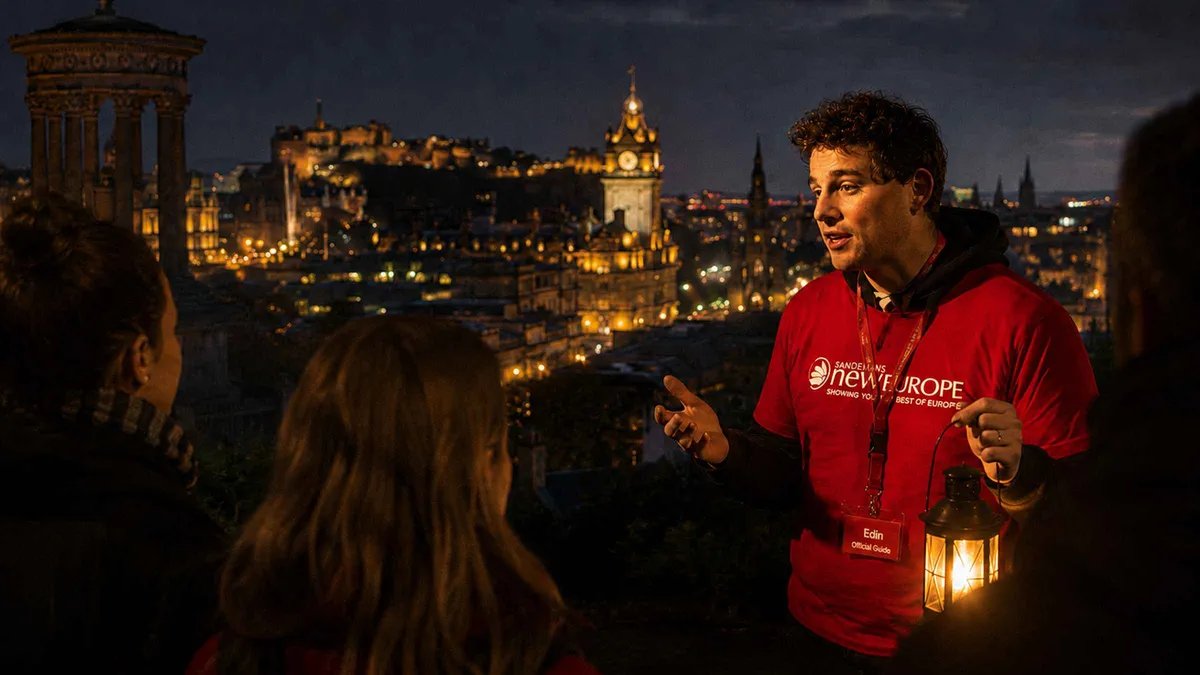
Edinburgh Darkside Ghost Tour of Mysteries Murder & Legends
A street-level dark-history walk that climbs Calton Hill and ends in Canongate Kirkyard, covering witch trials and the Anatomy Act. It talks about the vaults but does not go inside them.
Check Availability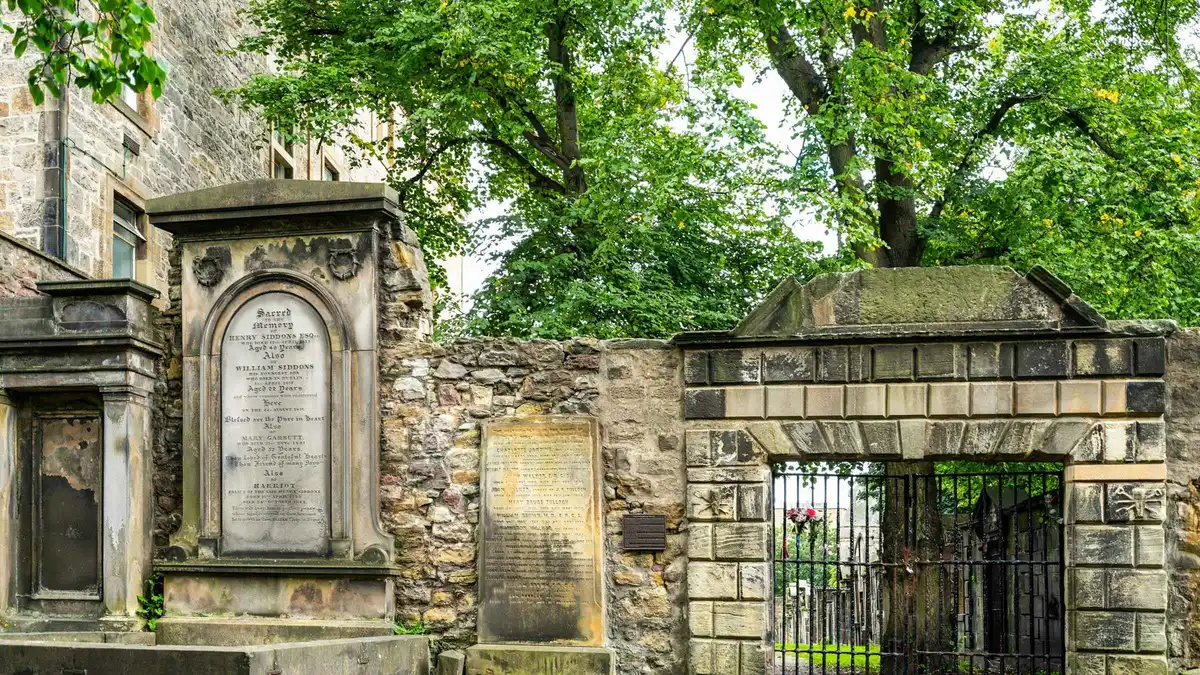 from £21.06
Edinburgh: Haunted Underground Vaults and Graveyard Tour
Adds Greyfriars Kirkyard and the Greyfriars Bobby legend to the same operator's vaults visit, over 90 minutes. Suggested for ages 12 and up; no torture exhibition on this route.
Check Availability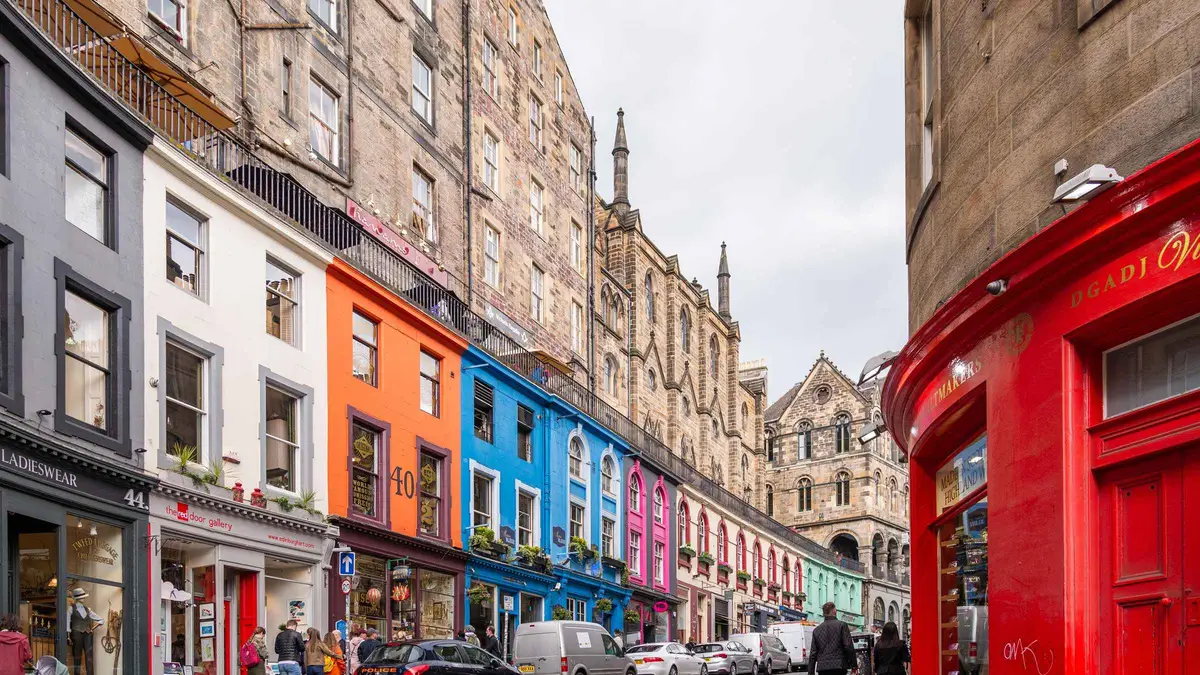 from £18
Edinburgh: Harry Potter Magical Guided Walking Tour
Two-hour walk between Greyfriars Kirkyard, Victoria Street and the Grassmarket, with a house-sorting quiz along the way. Runs in six languages, and the listing states plainly that no film scenes were shot in Edinburgh.
Check Availability from £16
Edinburgh: Old Town History Walking Tour
The cheapest Old Town walk on the site, two hours past St Giles', Victoria Street and Greyfriars Kirkyard with the Greyfriars Bobby statue. Runs in four languages rather than English only.
Check AvailabilityPrices, ratings and details are the platform's own. Pound figures are the listed prices. The platform bills in your account's currency.
Two places, one address: the kirkyard and the kirk are not run by the same people
This is the single most useful thing to understand before you come, and it explains almost every contradiction you will find online about opening hours.
The kirkyard — the walled graveyard, the monuments, Bobby's headstone, the paths — is owned by the City of Edinburgh Council. Day-to-day maintenance is done by the council's bereavement team, and the kirk's own website says so, adding that anything you find wrong out there, from litter to discarded needles to anti-social behaviour, should be reported to the council rather than to the church: bereavement@edinburgh.gov.uk. It is public ground, and it is open 24 hours a day, every day of the year.
Greyfriars Kirk is the church building in the middle. It is a separate visit, run by its congregation, free to enter with donations encouraged, staffed by volunteer welcomers, with information boards for a self-guided route in several languages and a small museum. And it publishes no fixed opening hours. Its site carries an "Opening Times" navigation item; the page behind it gives location and accessibility and no hours at all. What it publishes instead is a calendar that marks individual days open or closed.
The practical consequence is that you can plan the kirkyard to the minute and cannot plan the kirk at all. Check the Visit page on the morning you go, and if the interior matters to you, do not come in August.
August is the month the church is least likely to be open
In the kirk's own words: "throughout August, we are proud to be a Fringe Festival venue. Therefore, we are closed for general visiting many days in August, but we have a full programme of ticketed Fringe events available." So the month when Edinburgh is fullest is the month the building is emptiest of ordinary visitors — unless you buy a ticket to a show in it, which is a real option and gets you inside the same walls.
The kirkyard is unaffected. It stays open through the Fringe at every hour, which is also when it is at its busiest with tour groups, so early morning is worth more in August than in any other month.
Greyfriars Bobby: the dog, the grave, the statue, and the nose
The most photographed thing on this corner is a small bronze dog on a granite plinth, and the way people treat it is doing it damage. Here are the dates that are documented, the parts historians dispute, and the one request the city has made that visitors keep ignoring.
The story as it is told: John Gray, a nightwatchman with the Edinburgh City Police, died of tuberculosis on 15 February 1858 and was buried in this kirkyard. His dog Bobby — a Skye terrier by tradition, more likely a Dandie Dinmont on recent scholarship — is said to have kept to the grave for fourteen years until his own death on 14 January 1872, having been born on 4 May 1855.
The story as historians treat it: with caution. Jan Bondeson's work counts around sixty documented cemetery-dog stories in nineteenth-century Europe, several of them commercially useful to the pub or the churchyard concerned, and questions whether one animal survived the full fourteen years or whether more than one dog carried the name. The kirkyard itself publishes nothing that settles it. Both versions are worth carrying with you, because a guide will tell you one and the plaque will imply the other.
What is physically here is easier. Bobby's headstone stands near the entrance, erected by the Dog Aid Society of Scotland and unveiled by the Duke of Gloucester on 13 May 1981 — modern, and marking a reputed rather than a recorded spot, since the kirkyard is consecrated ground throughout and the dog may equally have been buried under a tree outside the gate. A further monument went up near the kirk's east wall in 2021, on the 150th anniversary of his death. John Gray's own grave, where the dog is said to have slept, lies on the eastern path about thirty metres north of the entrance, and the stone on it is modern too: the grave was originally unmarked.
The statue, and why you should keep your hands off it
The bronze on the plinth at the junction of George IV Bridge and Candlemaker Row, opposite the kirkyard gate, was made by the sculptor William Brodie in 1872 and paid for by Baroness Angela Burdett-Coutts; the plinth was originally a drinking fountain, with a bowl for dogs at street level.
Somewhere around 2012 a habit started of rubbing the dog's nose for luck. It is not an old tradition and it is not harmless: the rubbing strips the protective patina, the bare bronze weathers, and the nose now sits gold against a dark statue. The City of Edinburgh Council has asked visitors to stop — a council spokeswoman put it, with the straightest face available, as "while he enjoys attention from visitors and loves to have his photo taken, Bobby gets distressed when people rub his nose". The council restored the dark finish in 2013; the repair was deliberately scrubbed back off within days, causing about £300 of damage, and was treated as vandalism.
The useful version for a visitor: photograph it, do not touch it. A photograph of a statue with a black nose is a better photograph anyway.
The Covenanters' Prison is locked, and there is exactly one way in
The south-west corner of the kirkyard, behind an iron gate, is the part every ghost story is about and the part you cannot walk into. Here is why it is shut, what is actually in there, and what the one tour with a key costs.
The history first, because the ground and the name do not quite match. After the Covenanters' defeat at Bothwell Bridge on 22 June 1679, around 1,200 prisoners were brought to Edinburgh; with no room in the tolbooth or the castle, about 400 were held in a field on the south side of this kirkyard, enclosed by the Flodden Wall on two sides, by George Heriot's School's high wall on the west, and by a picket fence towards the graveyard. They were held there through the summer.
The name Covenanters' Prison stuck to the ground.
Why those vaults are not the cells, and why the gate is shut
The vaulted tombs in that corner are not the cells. Most of the field was built over by the city Bedlam around 1690, and the surviving strip between it and the school was taken into the burial ground about 1700, when the fashion was for enclosed vaults. They post-date the imprisonment by two decades.
| Way to see it | Price | When | Who it suits | Our note |
|---|---|---|---|---|
| City of the Dead haunted graveyard tour | £13 adult, £11 concession, £9 child (about $18 / $15 / $12) | 21:00 in summer, 20:30 in winter, Tuesday, Thursday, Friday and Saturday | Over-12s only; not for anyone with walking difficulties, a heart condition, or pregnant | 1 hour 20 minutes, meets by the single tree at the roadside wall of the cathedral; the operator states exclusive access to the Covenanters' Prison and the Black Mausoleum; prices, times and rules read on its own booking site on 30 August 2026 |
| Daytime, by arrangement with the kirk | Not published | Kirk opening hours only, which are themselves unpublished | Anyone who is already at the kirk and can ask | Wikipedia says access can be arranged with the kirk's guides; the kirk publishes nothing about it, so treat it as ask-and-see |
| Any other ghost walk | £17.60–£21.06 (about $24–$29) | Evenings, daily | Most visitors | They pass the locked gate and tell the stories from outside it — nobody else has the key |
| On your own | Free | Any hour | Nobody | The gate is locked and stays locked; climbing it is trespass on a burial ground |
The gate went on around 1990. The area had been open to view until then, and the City of Edinburgh Council locked it to stop persistent vandalism and use by drug users — the same problem the kirk's own site still asks visitors to report today. It has stayed locked since.
The Mackenzie poltergeist, said plainly
The domed tomb of Sir George Mackenzie — Lord Advocate under Charles II, the prosecutor the Covenanters called Bloody Mackenzie, and, architecturally, a fine Italianate piece by James Smith modelled on Bramante's Tempietto — stands beside the locked corner. Since 1999 the tour that goes in there has reported hundreds of physical "attacks" on visitors, and it is the best-known ghost claim in the city.
Our position is the site's usual one: it is an excellent evening out and it is not evidence. Nothing about it is published by the kirk or the council, no record supports it, and the operator that reports the attacks is the operator selling the tickets. Go for the storytelling, in the dark, in a locked graveyard, which is genuinely a memorable ninety minutes — and read the ghost tours page if you want the full comparison of the underground alternatives, most of which are cheaper and none of which unlocks this gate.
One piece of documented damage is worth knowing, because it explains the sealed ventilation slot: in 2003 two teenagers, aged 17 and 15, got into the Mackenzie tomb through the rear vent, broke open coffins in the lower vault and took a skull. They were charged under the old offence of violating sepulchres.
Why this graveyard exists, and what was signed in it in 1638
Two documents explain the ground: a burgh council minute of 1561 about the smell, and the National Covenant of 1638.
The kirkyard opened in August 1562 by royal grant, to replace the burial ground at St Giles' in the middle of town. The burgh council's reasoning, minuted on 23 April 1561, was blunt about why: the kirkyard there had no room left, and something had to be done about "the savour and inconvenientis that may follow thairupoun in the heit of somer" — a burial place further from the middle of the town was required. The St Giles' ground stopped being used around 1600. The name comes from the Franciscan friary that stood here until 1560; grey habits, grey friars.
On 28 February 1638 the National Covenant was signed here. Part of the signing happened in the kirk in front of the pulpit and part in the graveyard, which was used because it was a place of free legal public assembly — the popular image of Covenanters leaning on flat table stones to sign is wrong on one detail, since central gravestones were banned at the time and those stones did not yet exist. The document asserted, in the kirk's own summary, "the right of ordinary people to exercise their God-given consciences in matters of faith and life". You can see an original copy in the Kirk Museum inside the building, and another in St Giles' Cathedral up the hill, in the Chepman Aisle.
What followed is the reason half the monuments here are what they are: the wars of the three kingdoms, the killing time, the Martyrs' Monument commemorating executed Covenanters, and, forty-one years after the signing, four hundred prisoners in the field over the wall.
Inside Greyfriars Kirk: the redwood ceiling, the Covenant and the museum
The building is skipped by most visitors because they are looking for a dog and a locked gate. It is free, it takes twenty minutes, and it has the better objects.
Construction began in 1602 and the kirk opened on Christmas Day 1620 — the first church built in Edinburgh after the Reformation, on the site of the friary that gave the place its name. A second congregation, New Greyfriars, was added within the same shell by 1722; the two were reunited during the reconstruction of 1931–38, which is when the Californian redwood ceiling went in. Two events in between explain the patchwork: a gunpowder store in the tower blew up in 1718 and wrecked the west end, and a fire in 1845 gutted the interiors of both churches. Cromwell's troops used the building as a barracks between 1650 and 1653.
What to look at: the Kirk Museum, which holds an original copy of the National Covenant; the Victorian stained glass, including an east window of the parables; and the Peter Collins organ of 1990, with nearly 3,400 pipes. Information boards give you a self-guided route in several languages, and volunteer welcomers are usually on hand — the kirk describes over 400 years of its own history as the thing they are there to explain.
Tours run on donations rather than tickets. The volunteer-led history tours are pay-what-you-can and can be booked through Eventbrite or joined on the day; a bespoke tour arranged in advance carries a recommended donation of £10 per person (about $14), reduced for children and for groups over fifteen, and is arranged by phone or email. Everything depends on the kirk being open that day, which is why the Visit page calendar is the first thing to check.
Access, and the practical detail
The kirk states level access and toilet facilities for visitors with limited mobility, and Blue Badge parking can be arranged through the office on request. Street parking sits on Chambers Street and Lauriston Place, and the building is inside Edinburgh's Low Emission Zone — a vehicle that does not meet the standards can be fined for driving through it, which is a real risk for anyone in a hire car.
The kirkyard itself is a different surface entirely: gravel and worn paths, sloping in places, unlit at night beyond the street lights around it. It is a working burial ground before it is a visitor attraction, and it is signposted as such.
- Buses: 2, 9, 23, 27, 35 and 45 stop nearby, on the kirk's own list.
- Waverley station: about ten minutes' walk, per the kirk; the getting around page has fares and the tram.
- Contact: administrator@greyfriarskirk.com, 0131 225 1900.
- Report a problem in the kirkyard: bereavement@edinburgh.gov.uk — the council, not the church.
What to look at in the kirkyard itself, beyond the dog
The kirkyard is a Category A listed monument in its own right, and its seventeenth-century wall tombs are among the best in Scotland. A short route, north gate first.
The mural monuments along the east and west walls. These are the reason art historians come. Early seventeenth-century, dense with the symbolism of mortality and resurrection — the death's head, the Angel of the Resurrection, the King of Terrors — and mostly in the older northern part of the yard. They are carved for people who expected you to read them.
The mortsafes. Two low iron cages sit over graves. They were rented, not bought: they held a body long enough to spoil for the resurrection men who supplied Edinburgh's medical school with corpses, and they are the physical evidence of a trade the city usually tells as the Burke and Hare story. The enclosed lairs with solid walls and railings along the south edge were built for the same reason.
The Martyrs' Monument. Commemorating executed Covenanters, and the reason the prisoners' field over the wall carries the name it does.
The Mackenzie mausoleum. The domed Italianate tomb by James Smith, modelled on Bramante's Tempietto, standing beside the locked corner.
The names. Buried here, among many others: James Craig, who designed the New Town; the mathematician Colin Maclaurin; the Gaelic poet Duncan Ban MacIntyre, whose memorial was restored in 2005 for about £3,000 raised by public subscription; the poet William McGonagall; the architect James Gillespie Graham; and John Gray, whose dog you have already met. Some of the most famous graves are unmarked, including the inventor William Ged's.
The photographic connection. In the 1840s David Octavius Hill and Robert Adamson used this kirkyard as a set for some of the earliest photographic portraits and tableaux ever made, including The Artist and The Gravedigger. You are standing in one of the first outdoor studios in the history of the medium.
The Harry Potter graves: what is true, and what is a good story
This is the most common reason people come in with a phone open, and it deserves a straight answer rather than either a wink or a debunking.
The facts: the kirkyard contains a stone for Thomas Riddell, a grave for the poet William McGonagall, and a Moodie among the burials, and George Heriot's School — four towers around a quadrangle — stands immediately over the west wall. J. K. Rowling wrote parts of the books in cafés a few minutes away, which the whole city knows.
What is not on record: any statement tying those particular stones to those particular names. No source in this kirkyard claims it, the kirk publishes nothing about it, and no film was shot here — the operator of one of the Potter walks says so plainly in its own listing. The link is inference by tour guides, repeated until it hardened. That does not make it worthless; it makes it folklore about a book, in a graveyard already full of folklore, and it is more enjoyable when nobody is pretending.
The practical version: the Riddell stone is small, easy to miss, and often has a queue of three or four people around it. Do not put anything on it or lean on it; it is a real grave and the enthusiasm has already worn its lettering. If the film-tourism route is what you came for, the Harry Potter hub compares the tours that do it well, and the two-hour walk that comes through here also covers Victoria Street and the Grassmarket, where the connection is at least architectural.
Which tour to take, if you take one at all
Four different products come through this gate and they are not variations on one thing. The decision is what else you want in the ninety minutes.
If you want the locked corner: the City of the Dead haunted graveyard tour is the only one that opens it, at £13 (about $18), and it runs at 21:00 in summer and 20:30 in winter on Tuesdays, Thursdays, Fridays and Saturdays. Over-12s only, and the operator rules out anyone with walking difficulties or a heart condition, and pregnant visitors. It is not sold on the platforms we work with, so we link the operator's own booking page and earn nothing from it.
If you want the underground as well: the haunted vaults and graveyard tour at £21.06 (about $29) is the one that pairs this kirkyard with the South Bridge vaults, ninety minutes, suggested for ages 12 and up. It is the busiest ghost product in the city and it is rated 4.6 from 7,268 reviews.
If you want history rather than hauntings: the two-hour Darkside walk at £17.60 (about $24) is a licensed guide on witch trials, public executions and the anatomists, at street level, ending in Canongate Kirkyard rather than underground. Rated 4.8 from 1,488 reviews. It talks about the vaults and does not go into them, which is either the point or the problem depending on what you booked for.
If you want Rowling's Edinburgh: the six-language Potter walk at £18 (about $25) comes in here for the Riddell stone and then leaves for Victoria Street.
If you want none of the above: you lose nothing. The kirkyard is free at every hour and the stones are the same stones. A guide buys you stories and the confidence to walk a graveyard after dark; there is no gate they open that daylight does not, except the one.
Going in after dark on your own
It is legal — the kirkyard has no closing time — and it is not much recommended. There is no lighting inside the walls, the paths are uneven, and the kirk's own site asks visitors to report anti-social behaviour to the council, which tells you what the corners are occasionally used for. If the dark is what you want, do it on a tour with twenty other people, or come at first light instead, which gives you the same emptiness with the low sun down the east wall and no need to explain yourself to anyone.
Greyfriars Kirkyard map: the gate, the dog, the kirk and the locked corner
The six things worth walking to, plus the two neighbours a couple of minutes away. Positions come from OpenStreetMap and the kirk's own address; the pins inside the walls are accurate to within a few metres, which in a graveyard this dense means look around when you arrive.
Next stop from the kirkyard gate
Walking times are our estimates from the Candlemaker Row entrance.
National Museum of Scotland
Free, indoors, and directly east on Chambers Street — the natural next move when the weather turns, which in this graveyard it will. Hours, the roof terrace and what to see are on its page.
2 min walkSt Giles' Cathedral
Eight minutes north over George IV Bridge, and the other end of the same story: this kirkyard exists because that church's graveyard filled up, and both hold an original copy of the 1638 Covenant. Free, with its own opening-hours trap on a Sunday.
8 min walkThe Grassmarket
Straight down Candlemaker Row from the gate: the old market square under the castle rock, where the Covenanters commemorated inside these walls were executed. The square, its pubs and the Saturday market have their own page.
4 min walk downhillGreyfriars Kirkyard questions
What are Greyfriars Kirkyard opening times?
There aren't any. In the kirk's own words the kirkyard "is open to visitors 24 hours a day, 365 days" — it is council-owned public ground with no gate closure and no admission charge. The church building in the middle is the part with hours, and it publishes none in advance: it marks days open or closed on its Visit page and is shut for general visiting on many days in August. The two-places section explains why they are run separately.
Is Greyfriars Kirkyard free to visit?
Yes, completely, at any hour. So is Greyfriars Kirk itself, which asks for donations rather than an entry fee, and so are the volunteer-led history tours inside it, which run on a pay-what-you-can basis. The only thing on this site that costs money is a guide: the tour that unlocks the Covenanters' Prison at £13 (about $18), or one of the ghost and history walks that pass through the gates.
Can you go into the Covenanters' Prison?
Not on your own. The council locked the south-west corner around 1990 to stop vandalism and drug use, and the gate has stayed shut. One operator, City of the Dead, states exclusive access to it and to the Black Mausoleum on a 1 hour 20 minute evening tour at £13 (about $18), running at 21:00 in summer and 20:30 in winter on Tuesday, Thursday, Friday and Saturday, over-12s only. The comparison table has the alternatives, including the daytime possibility that nobody publishes.
Where is Greyfriars Bobby's grave, and where is the statue?
The headstone is inside the kirkyard near the entrance, put there by the Dog Aid Society of Scotland in 1981 and marking a reputed rather than a recorded spot; John Gray's grave, where the dog is said to have slept, is about thirty metres north of the entrance on the eastern path. The statue is outside, on the corner of George IV Bridge and Candlemaker Row — William Brodie, 1872, paid for by Baroness Burdett-Coutts. Please do not rub its nose: the council has asked visitors to stop and a 2013 restoration was scrubbed off within days.
Are the Harry Potter graves in Greyfriars Kirkyard real?
The graves are real; the connection is not documented. There is a stone for Thomas Riddell, a grave for the poet William McGonagall and a Moodie among the burials, and George Heriot's School stands over the west wall — but nothing in this kirkyard, and nothing on record, ties them to the books, and no film was shot here. What is true and what is a good story is set out above, and the Harry Potter hub has the tours that handle it honestly.
Is Greyfriars Kirkyard haunted?
It is the most claimed-haunted graveyard in the city, and the claims come from the operator selling tickets to see it. Reports of the Mackenzie poltergeist date from 1999 and run into hundreds of alleged physical attacks, all of them inside the locked corner and all of them recorded by the tour that has the key. Nothing about it appears in anything the kirk or the council publishes. Our reading is above; the ghost tours page compares the underground alternatives.
How long do you need at Greyfriars Kirkyard?
Nobody official publishes a time. Ours is thirty minutes for the statue, Bobby's headstone, the kirk exterior and the east wall monuments, and about an hour if you read the seventeenth-century wall tombs properly or the kirk is open and you go inside. The monuments route is ordered from the north gate.
Is it safe to walk through Greyfriars Kirkyard at night?
It is legal and it is unlit. There is no closing time, but there is also no lighting inside the walls, the paths are uneven, and the kirk's own site asks visitors to report anti-social behaviour and discarded needles to the council's bereavement team. If you want the graveyard after dark, do it on a tour; if you want it empty, come between about 08:00 and 10:00 instead.
The version of this that works
Come early. Between about 08:00 and 10:00 the walking tours have not started, the light runs along the east wall where the best monuments are, and you can stand in front of a seventeenth-century tomb without somebody's umbrella in the frame. Photograph the statue on the corner without touching it, find Bobby's headstone and John Gray's grave in the first five minutes so they are out of the way, then walk the north end slowly for the wall tombs and the mortsafes, which is what the kirkyard is actually good at.
Check the kirk's Visit page the same morning. If the building is open, give it twenty minutes for the Covenant in the museum and the redwood ceiling; if it is August, expect it to be shut and buy a Fringe ticket if you want inside. Skip the locked corner in daylight — there is nothing to do but look through a gate — and if it matters to you, book the evening tour that opens it instead.
Then keep moving: two minutes east puts you in the National Museum of Scotland for free, four minutes downhill puts you in the Grassmarket, and eight minutes north puts you in St Giles' Cathedral, which is where the other half of the Covenanters' story sits. The rest of the city, with the same hours-price-map treatment on every page, starts from what to do in Edinburgh.
Greyfriars Kirkyard on film: the graves, the dog and the claims
Three walk-throughs that between them cover the whole argument: what the kirkyard and kirk actually contain, what the Bobby story leaves out, and how the haunted version is told on the ground. Ids copied from our verified list, embedded without cookies.
The truth behind Edinburgh's "haunted" graveyard: a full tour of Greyfriars Kirk and Kirkyard
The most complete walk-through of both the church and the graveyard, and sceptical about the ghost claims.
Video: The Museum GuideTour guides lie to you about Greyfriars Bobby and Greyfriars Kirkyard
The counter-argument to the dog story, which is worth ten minutes before you take a guided version at face value.
Video: Travelling TouristGreyfriars Kirkyard in Edinburgh: MacKenzie poltergeist, Harry Potter and Greyfriars Bobby
A visitor's route round the three things everyone comes for, filmed in daylight.
Video: Travel Bee MelissaThird-party videos. Neither the channels nor the videos are connected to this site.
Prices, hours and terms are set by the venue or operator and confirmed at checkout.
We may earn a commission if you book through one of our links, at no extra cost to you. Full affiliate disclosure