 Visit Edinburgh Guide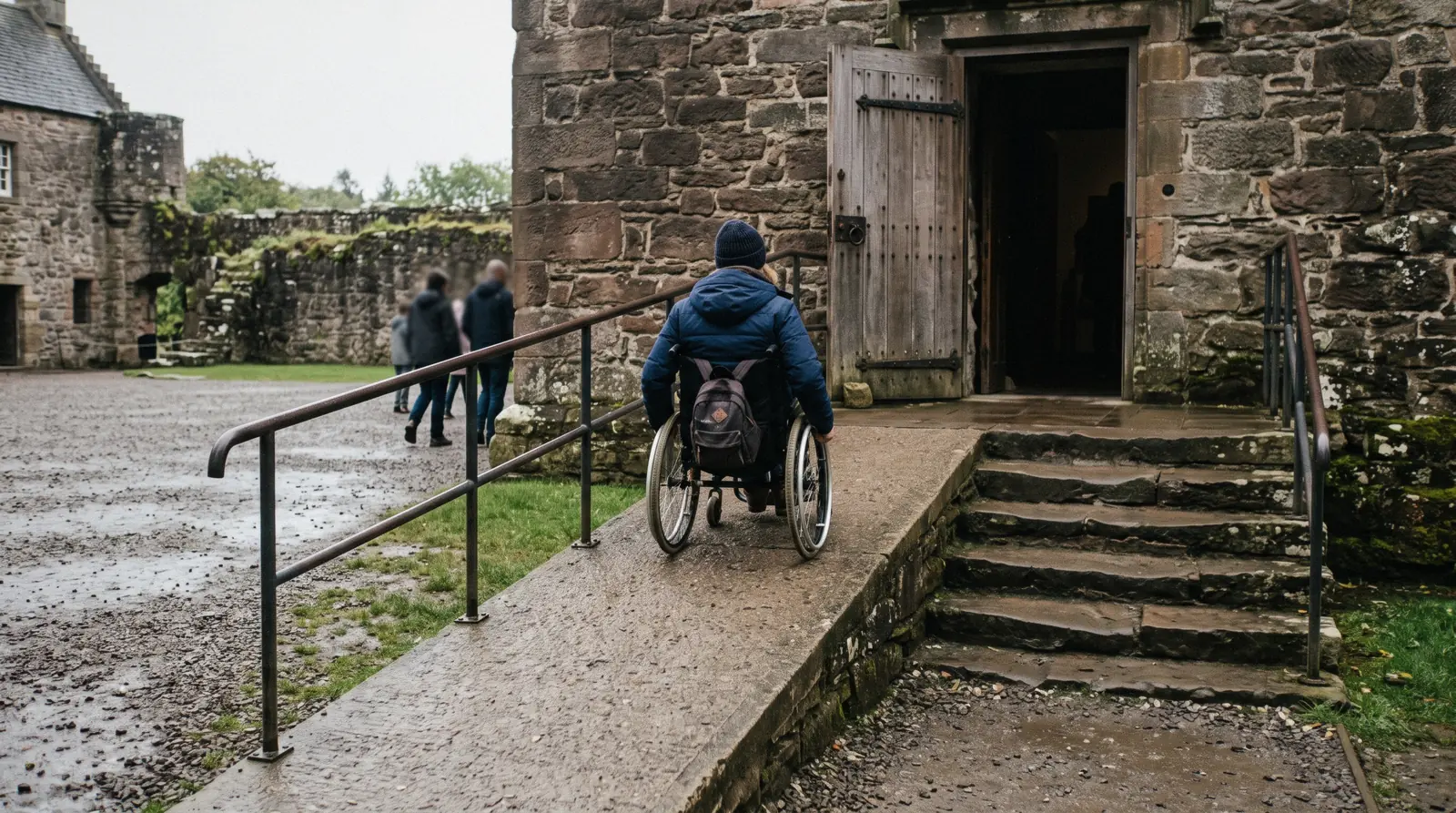
Edinburgh Accessibility: Step-Free Entry, Venue by Venue
Edinburgh accessibility is not one answer, it is forty, because this is a medieval ridge with a Georgian grid bolted onto its north side and every building on it was finished long before anybody drew a ramp. Some of those buildings have solved it completely — the National Museum has lifts to every floor and lends wheelchairs for nothing, the Royal Yacht moves you between five decks without a step — and some of them cannot, and say so plainly: the Scott Monument is stairs only, the Real Mary King's Close is 58 steps down and 38 back up. What follows is what each venue publishes on its own access page, read on 30 August 2026 and quoted rather than summarised, plus the places where the honest answer is that nobody publishes anything at all. Fares and routes for the buses and trams that get you between them are on the getting around page, and the rest of the city starts with what to see in Edinburgh.
Quick answer Which venues are step-free, which are stairs only, and what carers pay
Roughly half of Edinburgh's headline sights are genuinely step-free inside and half are not, and the split has nothing to do with how famous they are. The National Museum of Scotland, the Royal Yacht Britannia, Dynamic Earth, St Giles' Cathedral, the Royal Botanic Garden and the Johnnie Walker experience all publish level or lift access throughout. The Scott Monument, the Nelson Monument, Camera Obscura, the Real Mary King's Close and the upper reaches of Edinburgh Castle publish the opposite, in their own words. Carers go free at almost every paid venue in the city, but the ticket usually has to be added at the time you book.
Key takeaways
- Edinburgh Castle takes wheelchair users as far as Crown Square in a mobility vehicle you request at the entrance, but the standard exit is 70 stone steps and the vehicle stops running between 12:15 and 13:15 for the One o'Clock Gun
- The step-free day that needs no planning at all is Leith: level access to the Royal Yacht Britannia, lifts between all five decks, and a distillery on the same tram line that moves you between floors by lift — the Leith guide has the route
- Every ticket in the venue table that says stairs only publishes an alternative, and the alternatives are worth asking for: a video of the Thistle Chapel at St Giles' Cathedral, a support chair at the Real Mary King's Close, a virtual tour of Camera Obscura
- Both the buses and the trams are wheelchair accessible as a matter of policy, but the tram is the easier vehicle: level boarding, two spaces per tram, and the transport section has the mobility-scooter permit rule that catches people out
Step-free access at thirteen Edinburgh venues
Thirteen venues on the four things that decide a visit: the front door, the route inside, the accessible toilet and the companion policy. Every line was read on the venue's own accessibility page on 30 August 2026 — no aggregator, no blog, no averaging between two sources.
| Venue | Step-free entry | Level or lift route inside | Accessible toilet | Companion policy |
|---|---|---|---|---|
| Edinburgh Castle | To the gate: 110 m of smooth tarmac at a 5° gradient, then a wooden-slatted bridge | No — a steep curved cobbled climb; a mobility vehicle runs to Crown Square on request, manual wheelchairs lent first come | Yes, at the entrance and in Crown Square; the entrance block was under refurbishment when we checked | Two carers free per transaction, added when you book; standard rates, no proof required |
| Palace of Holyroodhouse | Yes | Largely accessible; Mary, Queen of Scots' rooms restricted | Yes, in the Café at the Palace, enterable without a ticket | Concessionary rate plus a free access-companion ticket, bookable online |
| National Museum of Scotland | Yes — the Tower Entrance gives level access and skips the busy main hall | "Lifts are available to all floors"; wheelchairs lent free while you visit | Not stated on the accessibility page we read | Free entry for everyone, so nothing to arrange |
| The Royal Yacht Britannia | Yes, from the visitor centre inside Ocean Terminal | Tour route, shop and tearoom "highly accessible via lifts and stairs" across five decks | Not stated on the visit page we read | Not stated; a BSL/ASL tablet and a Braille script are published |
| St Giles' Cathedral | Yes — a ramp in and a second ramp inside, and that inner ramp is the walkway everyone uses | Level, except four steps into the Thistle Chapel and the steps into the shop and side aisles | None; the nearest is the National Library on George IV Bridge, five minutes away | Not stated; two manual wheelchairs can be borrowed |
| Scott Monument | Level access from the gardens to the entrance desk only | No — "the monument is accessible by stairs only" | Not stated | Complimentary ticket for personal assistants |
| Camera Obscura | Two steps in from the courtyard entrance | No — 98 steps over five floors, no lift, handrail on one side only; wheelchairs left in the foyer | Not stated | One carer free with ID; a virtual tour and an AccessAble guide are published |
| The Real Mary King's Close | Ground floor only, including the shop | No — 58 steps down and 38 up, and a lift is impossible in a listed close | Yes, on the ground floor | One carer free; 50% off for guests with a visual impairment |
| The Edinburgh Dungeon | Mainly level pathways with low-gradient slopes | Lifts plus stairlifts you transfer to unaided, 120 kg limit; one wheelchair user at a time, so book ahead | Yes, on the lower level past admissions, reached by the lift | An assistant comes free; no mobility scooters |
| Nelson Monument, Calton Hill | No — two steps at the entrance, no lift or ramp, and steps up to the hill | No — upper levels by stairs only | Not stated | Complimentary ticket for personal assistants |
| The Scotch Whisky Experience | Yes, with a published access statement and a video access guide | Lift access, covered step by step in the access statement | Yes, covered in the access statement | Carers free, or full price if they take the tour and tasting |
| Royal Botanic Garden Edinburgh | Yes | Paths "largely accessible" and mostly tarmac, some routes steeply graded; free scooter and wheelchair loan, two hours | Five, including three in the John Hope Gateway | Not stated; assistance animals welcome |
| Dynamic Earth | Yes | "All areas of our building are wheelchair accessible" | Not stated on the accessibility page we read | Carers free with a Blue Badge, C+1 card or PIP or DLA letter |
Read on each venue's own access page on 30 August 2026. "Not stated" means the venue publishes nothing on that point, and we would rather print the gap than fill it. Ring ahead if the answer decides your visit — the contacts are on each venue's guide, linked from the tickets index. The column that decides most visits is the third: a step-free front door means very little in a building whose interest is on the fourth floor.
The city itself is the first obstacle, and no one publishes a map of it
Before any venue's access page matters, there is the ground between the venues. Edinburgh's tourist centre sits on a volcanic ridge with the Old Town along its spine and the New Town on the flat ground below and to the north, and the two are joined by bridges, flights of steps and streets steep enough to be closed to wheeled traffic in ice.
The Royal Mile runs one mile from the castle esplanade to Holyrood and drops about 220 feet doing it. Going down is a gentle, continuous descent that most manual wheelchair users manage with a companion on the brakes; going up is a sustained climb with no flat section to rest on. The streets running off it are worse, because they fall off the ridge rather than along it, and many of the closes are stepped — the Old Town guide maps which are stairs and which are ramps.
The surface is the second problem. Much of the Old Town and the Grassmarket is laid in setts — square granite blocks with recessed joints — and a sett street transmits every joint through a wheelchair frame, soaks the grip out of a stick in the rain and swallows the tip of a crutch. Where you have a choice between a sett street and a tarmac one running parallel, take the tarmac: Market Street instead of the Cowgate, Princes Street instead of the Mound.
The New Town is the flat city, and it is five minutes away
Everything north of Princes Street was laid out on a grid between 1767 and about 1850 on comparatively level ground, with wide pavements, dropped kerbs and shallow gradients, and three free national galleries sit on or just off it. If a day in the Old Town has gone badly, the New Town is the recovery, and the tram runs the length of Princes Street so you can arrive without crossing the ridge at all. The join between the two is the awkward part: Waverley station sits in the valley below everything, and the Waverley Steps at its north end are what most people meet first.
The station has lifts — use them, and come out on Market Street rather than climbing.
Buses, trams and tour buses: what each operator actually publishes
Two operators run almost all of Edinburgh's public transport and both publish detailed accessibility pages, which makes this the best-documented part of the trip. The figures and the quotations below are from lothianbuses.com/accessibility and edinburghtrams.com/contact/tram-accessibility, read on 30 August 2026. Fares themselves are on the getting around page — nothing on this page changes what you pay.
The tram is the easier of the two vehicles, and it is not close. Every tram is low-floored and the stops are reached by gently sloping ramps or lifts, so boarding is level rather than ramped on request.
| Mode | Wheelchair spaces | How you board | The rule that catches people | Where to ask |
|---|---|---|---|---|
| Edinburgh Trams | Two per tram, middle carriage, shared with buggies | Level boarding from a ramped or lift-served platform | Mobility scooters need a permit issued in advance — Class 2 only, maximum 1200 mm long and 700 mm wide, 1200 mm turning radius, posted out within 10 working days | Customer Relations, 0131 338 5780 |
| Lothian buses | One wheelchair space plus a shared buggy space, each 0.75 m wide | Driver-deployed ramp at the door | Wheelchair users have legal priority over the space: a buggy or a rollator in it must move. Rollators and wheeled walkers may have to be folded when the bus is full | Accessibility and Inclusion Officer, by email |
| Airlink 100 airport bus | Same low-floor fleet as the city buses | Driver-deployed ramp, at the airport stance and in the city | Standard Lothian day tickets and caps are not valid on Airlink, but a National Entitlement Card is | Lothian's accessibility team |
| Edinburgh Bus Tours open-top sightseeing | Two rear-facing spaces with their own display screens on three of the four tours | Ramped access on all tour buses | A Class 2 mobility scooter is carried only if a wheelchair space is free, and wheelchair users have priority for it | hello@edinburghtour.com, or the accessibility team at Lothian |
| Taxis | Edinburgh's licensed black cabs are wheelchair accessible as a fleet | Ramp carried in the vehicle | No fare table is published on a web page; the council sets the tariff and the meter runs to it | The rank, or a phone booking |
Each tram carries two dedicated wheelchair and buggy spaces in the middle carriage — a wheelchair symbol on the platform shows where to wait — plus priority seats and passenger alert buttons signposted in Braille. The operator asks wheelchair users to park with the back of the chair against the cushion and the brake on, and to ring the bell when you want to get off so the driver allows extra time.
Free travel, and why a visitor cannot have it
Lothian gives free travel on its day services to disabled people, over-60s and under-22s holding a valid National Entitlement Card. That is a Scottish Government residents' scheme with no visitor version, so a disabled traveller from outside Scotland pays the ordinary £2.40 (about $3.26) single. The card must be scanned on boarding, and the driver will scan it for you if you cannot.
What Lothian offers anyone is a named Accessibility and Inclusion Officer with a public email address — one person to ask, rather than a form.
The hop-on hop-off buses are the most accessible tour in the city
All four Edinburgh Bus Tours routes run ramped, wheelchair-accessible buses, and three carry two rear-facing wheelchair spaces with their own display screens on the lower deck showing a live view from the front of the bus — the closest thing in Edinburgh to a sightseeing view for someone who cannot climb to an open top. Two run subtitled commentary on those screens; the Edinburgh Tour has a live guide instead, and one carer travels free per individual booking. That combination is why the City Sightseeing 24-hour ticket at £20 (about $27) and the Big Bus ticket at £19.80 (about $27) do more for a limited-mobility day here than they would in a flat city.
Edinburgh Castle: the mobility vehicle, the bridge and the seventy steps down
The castle publishes the most detailed access guide of any venue in the city, and it is worth reading in full before you go, because the honest summary is that the site is a fortified hill and the route through it is a climb. Everything here is Historic Environment Scotland's own wording, read on 30 August 2026.
You cross the esplanade first: 110 metres of smooth tarmac at a five-degree uphill gradient, wide and even. Then you enter over a wooden-slatted bridge. Inside, the route is a steep curved cobbled climb and several areas are reached only by steps, so the castle runs a mobility vehicle to Crown Square that staff arrange at the entrance.
It takes three passengers plus one wheelchair user, and carries a wheelchair or walking aid up to 103 cm high, 73.5 cm wide, 100 cm long and 150 kg. It does not run between 12:15 and 13:15, because that is when the One o'Clock Gun is fired, so the 12:30 and 13:00 entry slots come with the longest waits of the day. Several manual wheelchairs are also lent, first come first served.
- Adapted toilets are immediately left of the entrance and in Crown Square, in the corridor between the Great Hall and the gift shop near the lift. Both are reached over cobbles.
- The steepest section is the cobbled incline up through Foog's Gate; Hospital Square is reached down a cobbled ramp at 12 degrees.
- Crown Square, where the Honours of Scotland are, is large, level and paved, and the Great Hall and the National War Memorial both have ramped access.
- The standard exit is 70 stone steps with a handrail. If that is unsuitable, staff will walk you back down through the castle the way you came — ask, do not attempt it.
- Accessible parking is a small number of spaces on the esplanade for ticket holders, first come or pre-booked at ecparking@hes.scot, and largely unavailable from May to October while the Tattoo stands are built.
The One o'Clock Gun is a sensory event, not a photo opportunity
It is fired every day except Sunday, Good Friday and Christmas Day, from a level but cobbled area beside the Redcoat Café, and the castle's own description is a loud and sudden noise. If you are travelling with someone who reacts badly to that, the fix is timing rather than avoidance: be somewhere else on the rock at 13:00, and remember that the mobility vehicle pauses for an hour around it.
Ear defenders in adult and child sizes are lent from the ticket scan, and sensory backpacks come from the ticket office with ear plugs, tactile toys, sunglasses, binoculars, a wind-up torch, a sand timer and a sensory map inside. The sensory map can be downloaded before you travel and used on your own phone.
What it costs, and the bags that get turned away
Disabled visitors pay the ordinary adult, concession or child rate and no proof of disability is asked for. Up to two carers enter free per transaction, and this is the detail worth acting on: the carer tickets are added when you book, not sorted out at the gate. Prices and booking routes are on the castle tickets page, and what to see inside is a separate guide.
One rule turns people away regardless of access: suitcases and rucksacks of 30 litres or more are not allowed in, and the castle stores nothing at all. Assistance dogs are welcome throughout, including inside the roofed areas. BSL tours are arranged in advance through interpretation@hes.scot, and if no Deaf guide is free there is a BSL itinerary to follow on your own.
The carer policy here is the city's model — Historic Environment Scotland charges disabled visitors the ordinary rate, asks for no proof and admits two carers free — and almost every paid venue in Edinburgh does something equivalent, listed in the last column of the table above. Two exceptions are worth writing down: the Dungeon's single wheelchair space has to be reserved, and Royal Edinburgh Military Tattoo accessible seating cannot be bought online at all and must be booked by phone on +44 (0)131 225 1188.
The venues that solved it: lifts, level routes and loaned wheelchairs
Five places in Edinburgh publish access good enough to build a day around, and four of the five are free or close to it. This is where to start if the trip has to work rather than merely be attempted.
The National Museum of Scotland is the strongest single answer in the city. Its own page says "lifts are available to all floors" and "wheelchairs are available for loan at no charge whilst visiting the museum", and it tells you which door to use: "entering by the Tower Entrance avoids the busy Entrance Hall by the Main Entrance and provides level access to the main part of the museum." There are large-print labels, induction loops at the information desks and in the auditorium, and a sensory map naming the calmer galleries. Entry is free, it opens daily 10:00 to 17:00, and the museum guide has the route through it.
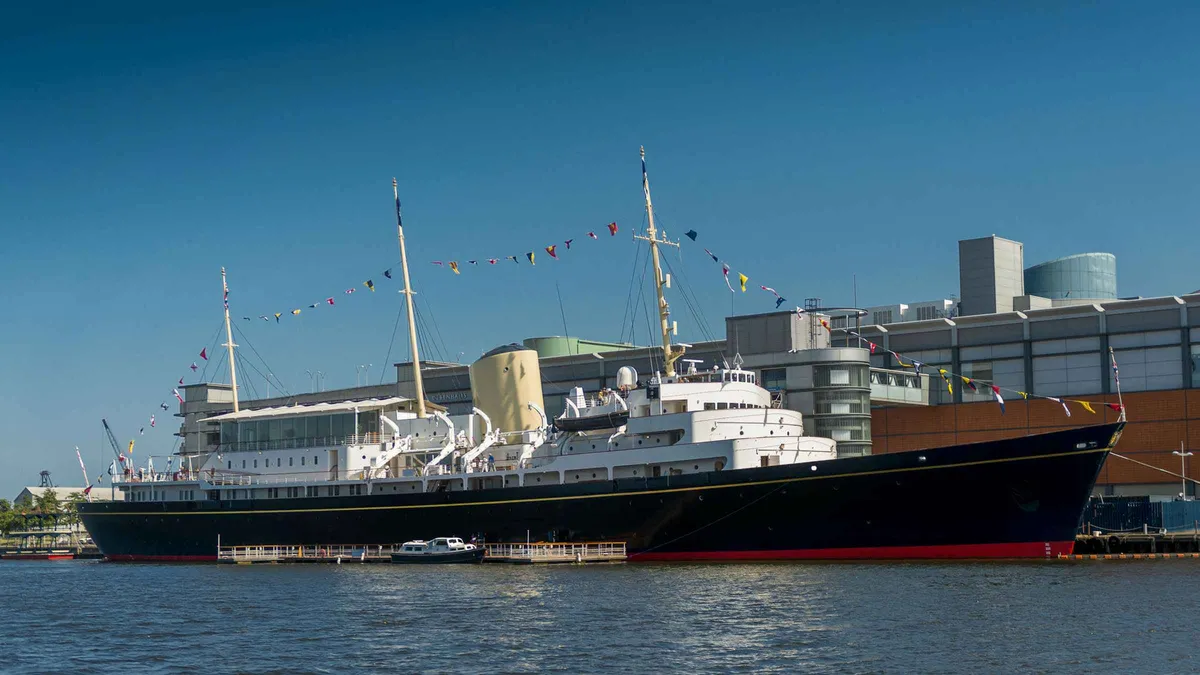
The Royal Yacht Britannia describes its visitor centre, tour route, shop and Royal Deck Tearoom as "highly accessible via lifts and stairs" — five decks with lifts between them, which is not what most people expect of a ship. The audio guide runs in 42 language versions and there is a BSL and ASL tablet and a Braille script. It sits inside a shopping centre at the end of the tram line, so the approach is level too. The ticket is £25 (about $34).
Dynamic Earth, the Botanics and the whisky venues
Dynamic Earth states flatly that "all areas of our building are wheelchair accessible", and goes further than anyone else in the city on neurodivergent provision: explorer packs with fidget toys, ear defenders, sunglasses and stress balls, sensory maps, now-and-next cards, BSL-interpreted planetarium shows daily, Relaxed Days at reduced capacity with adjusted lighting and sound, and Quiet Afternoons on selected Sundays from 14:00 to 17:00. Carers go free with a Blue Badge, a C+1 card or a PIP or DLA letter.
The Royal Botanic Garden calls its paths "largely accessible", with marked routes and tarmac in most places and a frank warning that some are steeply graded. It lends mobility scooters and manual wheelchairs free for up to two hours a booking, advance reservation strongly recommended, with limits of 133 kg on the scooter and 120 kg or 200 kg on the manual chairs. There are nine Blue Badge spaces and five accessible toilets.
The Scotch Whisky Experience publishes an access statement and a video access guide covering arrival, lift access, toilets, the tour, the shop and the restaurant, and runs tours translated into BSL and ASL with Deaf Action; it was the first winner of Euan's Guide Venue of the Year in the Scottish category. Carers go free unless they take the tour and tasting. The tour and tasting is £25 (about $34). Two working distilleries also move visitors by lift — Holyrood at £27 (about $37) and Port of Leith at £25 (about $34), the latter a vertical distillery built around its lifts.
Two free buildings belong on the same list. St Giles' Cathedral has a ramp in and a second ramp inside, and the point it makes about that inner ramp is the one that matters: it is the walkway every visitor uses, so a wheelchair user is not routed round the back. Greyfriars Kirk publishes level access, a toilet for visitors with limited mobility and Blue Badge parking arranged through the office; the City Art Centre says "an escalator and lift provide easy access to all floors". The two National Galleries publish no access detail on the pages we could read — a gap in their publishing rather than a verdict on their buildings, and the museums hub has the rest of the free list.
Where a wheelchair cannot go — and what the venue offers instead
Four of Edinburgh's best-known paid attractions are, by their own account, closed to wheelchair users, and all four publish an alternative rather than simply saying no. Knowing which is which before you buy a ticket is the most useful thing on this page.
The Scott Monument is the clearest case: "due to the historic nature of the building, the monument is accessible by stairs only." What you can reach on the level is the entrance desk and the gardens around it. There is no lift and no plan for one — it is a Victorian spire with a spiral stair inside — and personal assistants get a complimentary ticket, which matters if a companion climbs while you wait. Two other published rules catch people out: it closes daily for lunch between 12:30 and 13:45, and children under five are not admitted at all. The monument guide has the rest.
Camera Obscura is a listed six-storey building with no lift and 98 steps across five floors, a handrail on one side only and two-way traffic on the stairs. Wheelchairs cannot go round the exhibition floors — the building is too narrow for a fire evacuation with one in it — but they can be left in the foyer, and a visitor who can manage stairs with a companion's help can still do the visit. There is seating on every floor, walking-stick stools lent from reception, a published virtual tour at virtualinclusion.com/cameraobscura and an AccessAble guide, and one carer goes free per paying visitor with ID.
The Real Mary King's Close and the Edinburgh Dungeon
The Real Mary King's Close states there is no wheelchair access and that a lift is impossible in a listed close: the tour is 58 steps down and 38 back up, with handrails on all staircases. What it offers instead is specific — support chairs arranged in advance through contact@realmarykingsclose.com, ground-floor toilets and shop that stay usable while your group goes below, guides carrying radios who can have someone walk you back up at any point, one carer free, and 50% off for guests with a visual impairment. It also warns plainly that many areas are dimly lit and that "some guests may experience disorientation or claustrophobia", which is a sentence to take at face value.
The Edinburgh Dungeon is the most complicated entry in the city. Its pathways are mainly level and it has passenger lifts, but only one wheelchair user can be admitted at a time so that an evacuation chair stays free, which makes booking ahead close to mandatory. Several flights are served by stairlifts with a 120 kg limit that you must transfer onto unaided, staff are not permitted to lift you, and mobility scooters cannot be accommodated at all. Guests stand for most of the roughly 70-minute show, three areas contain flashing lights with an alternative route round them if you speak to staff first, and the venue warns that the darkness and uneven floor are difficult for blind and partially sighted visitors and that its actor-and-voiceover delivery in low light will lose parts of the show for Deaf visitors. An assistant comes free. The Dungeon guide has the ages and prices.
The two hills, and the monument on top of one of them
Arthur's Seat is a 251-metre hill inside the city with no accessible route to the summit — no venue publishes one because there is no venue, only Historic Environment Scotland's warning to "beware of sheer drops, uneven and slippery surfaces" and to wear sturdy shoes with good grip. What Holyrood Park does have is a flat, wide tarmac road loop closed to motor traffic all day every Saturday and Sunday, which makes it the best long, level outdoor route in central Edinburgh, plus toilets by the Education Centre behind the palace on seasonal hours. The Arthur's Seat guide has the paths.
Calton Hill is the lower and easier summit, walkable from Waterloo Place, but the Nelson Monument on it publishes "access with steps": two steps at the main entrance, no lift, no ramp, upper levels by stairs only, and steps between the entrance and the hill itself. Display information comes in braille and large print, visit guides exist in German, French and Spanish, and personal assistants get a complimentary ticket. The Calton Hill guide is honest about the surface at the top.
Sensory, autistic, Deaf and blind visitors: what is actually provided
This is the part of Edinburgh's access provision that has moved most in the last few years, and almost none of it is advertised where a visitor would find it. Everything below is published by the venue itself and was read on 30 August 2026.
Quiet and relaxed sessions. St Giles' Cathedral runs a Quiet Hour every Saturday from 09:00 to 10:00 with noise, lighting and crowding deliberately reduced for neurodivergent visitors — a scheduled hour, every week, in the middle of the Royal Mile, in a building that is free to enter. Dynamic Earth runs Relaxed Days at reduced capacity with adjusted lighting and sound, plus Quiet Afternoons on selected Sundays from 14:00 to 17:00.
Visual stories and sensory kits. Edinburgh Castle publishes visual stories for autistic visitors in separate adult and child versions, photographing the staff, the spaces and the facilities so nothing is a surprise, and lends sensory backpacks from the ticket office and ear defenders at the ticket scan. Its backpacks hold ear plugs, tactile toys, sunglasses, binoculars, a wind-up torch, a sand timer and a sensory map. The National Museum publishes a sensory map naming its calmer galleries.
British Sign Language. The castle arranges BSL tours through interpretation@hes.scot and publishes a BSL itinerary for self-guided visits when no Deaf guide is free. The Scotch Whisky Experience translates its tours into BSL and ASL with Deaf Action and offers International Sign through its audio-visual guides. Holyroodhouse's multimedia guide comes in BSL and with subtitles, and the Royal Yacht carries a BSL and ASL tablet. Police Scotland publishes a 999 BSL service for emergencies.
Blind and partially sighted visitors
Holyroodhouse publishes an audio-descriptive guide for blind and partially sighted visitors alongside its multimedia guide, and the Royal Yacht carries a Braille script and an audio guide in 42 language versions. The Nelson Monument and the Writers' Museum publish display information in braille or large print, and the City Art Centre programmes described tours. Edinburgh Castle's audio guide exists in large print and in an Open Dyslexic large-print version, downloadable to your own phone before you travel — worth doing, because the castle warns that connectivity on the rock varies.
The Real Mary King's Close discounts admission by 50% for guests with a visual impairment while being explicit that its own environment is dim and uneven. On the trams, the passenger alert buttons are signposted in Braille, and assistance dogs are welcome at every venue named on this page.
What nobody publishes, and why we are printing the gap
A page like this is only useful if it is honest about its holes. Start with the largest: there is no official City of Edinburgh Council accessibility map of the tourist centre — no gradient map, no step-free route network, no register of which closes have steps — and the council's own Blue Badge pages returned 404s on every URL we tried on 30 August 2026. What exists instead is charity work: Euan's Guide's disabled-access reviews and AccessAble's surveyed guides, several of which the venues link to themselves. These are the other questions we could not answer from an official source.
Accessible toilets at three major venues. The National Museum of Scotland, the Royal Yacht Britannia and Dynamic Earth all publish strong access statements and none of the pages we read says where the accessible toilets are. All three are large modern-fitted visitor buildings and it would be surprising if they lacked them; we still will not print a fact the venue does not.
Changing Places facilities in central Edinburgh. No official register on the council's site or the venues' own pages told us which central attractions have one, with the hoist and adult-sized bench that implies. The nearest thing to a list is charity-run and crowd-sourced.
The National Galleries. The Scottish National Gallery and the Portrait Gallery are free, open daily 10:00 to 17:00 and central, and their domain refuses automated requests; the pages we read in a browser session on 30 August 2026 carried hours and cafés but no access statement we could quote. Phone +44 (0)131 624 6200 before travelling if access decides the visit.
Edinburgh Zoo, and the smaller civic museums. The zoo links an accessibility statement from its visit page but publishes no detail inline, which matters on a site laid out up a hillside. The Museum of Edinburgh and the People's Story publish nothing inline either.
Foreign disabled parking permits. mygov.scot says a visitor from outside the UK "may be able to use your disability parking permit from your home country" and tells you to contact the local council to check. That is the whole of the published guidance — a phone call, not a web page.
Day trips, and the one that works
Day trips. Almost every full-day coach tour listing in our own catalogue states that it is not suitable for wheelchair users, a handful adding that a collapsible lightweight wheelchair will be carried if a companion assists with boarding. That is the operator's wording, and it is why no coach day trip appears in the cards below. Where a destination does publish access, Glasgow is the standout: Kelvingrove and the Riverside Museum both give wheelchair access to all public areas by lift, and the Riverside has a Changing Places facility on the ground floor with no key required, which makes Glasgow the most accessible day trip from Edinburgh by a distance.
Tours and tickets whose own listings say wheelchair accessible
Every card below carries the operator's own accessibility wording, read on 30 August 2026, and prices are in pounds as the operator lists them; dollar figures are approximations at £1 = $1.36 and are never what you are charged. We have left out every coach day trip, because their listings say the opposite. Check the operator's page before booking — the listing is the operator's claim, not a survey of the building.
 from £25
Edinburgh: The Royal Yacht Britannia Ticket
Admission to the former royal yacht in Leith, self-paced over roughly two hours with an audio handset in 36 languages. The ticket doubles as an annual pass for 12 months.
Check Availability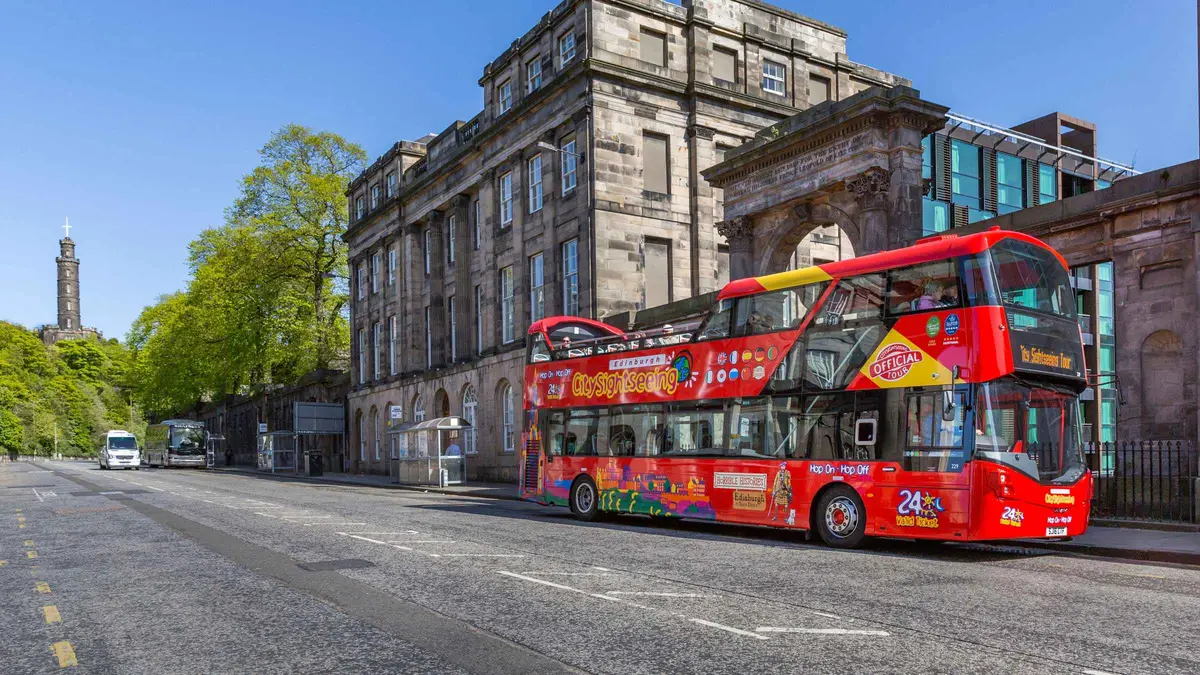 from £20
Edinburgh: City Sightseeing Hop-On Hop-Off Bus Tour
A single 24-hour ticket on one 70-minute loop of 15 stops, with a Horrible Histories children's channel. Up to three kids travel free per paying adult, which the multi-route passes do not offer.
Check Availability from £25
Edinburgh: The Scotch Whisky Experience Tour and Tasting
An attraction tour on Castlehill covering all five whisky regions, with a tutored dram and a crystal glass to keep. The Gold option adds four regional single malts in the McIntyre Gallery.
Check Availability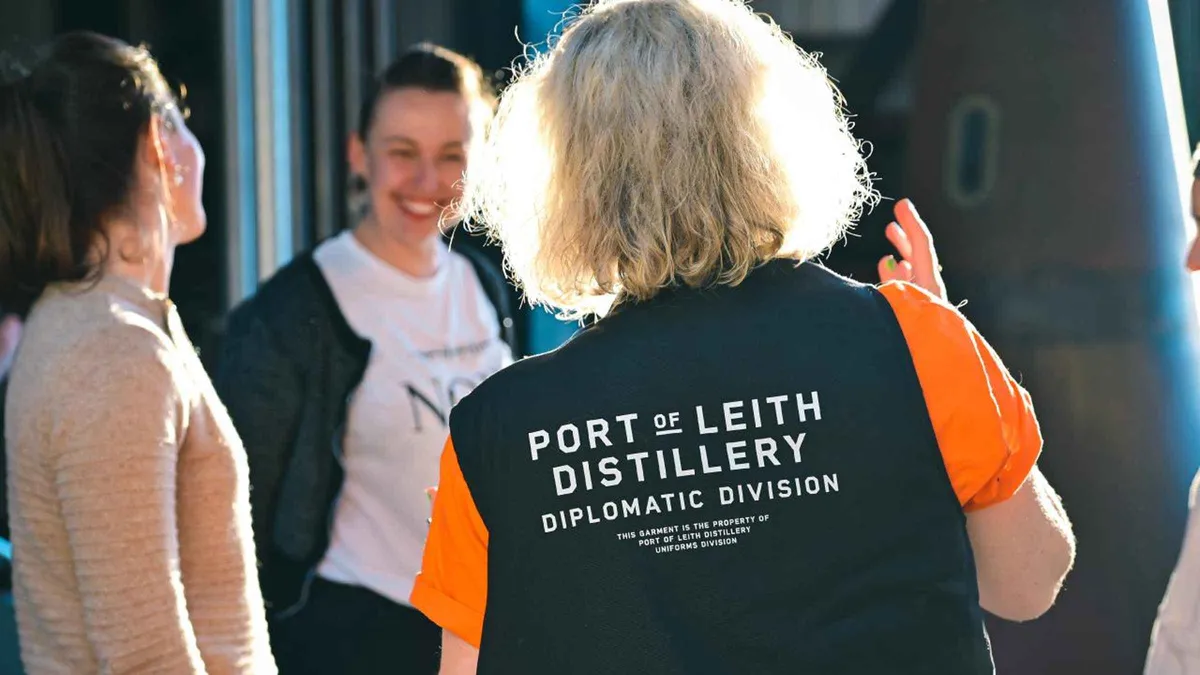 from £25
Edinburgh: Port of Leith Distillery Tour & Tasting
Ninety minutes in the UK's first vertical distillery in Leith, tasting New Make spirit, port, sherry and Table Whisky. You fill and keep a miniature bottle of the new make.
Check Availability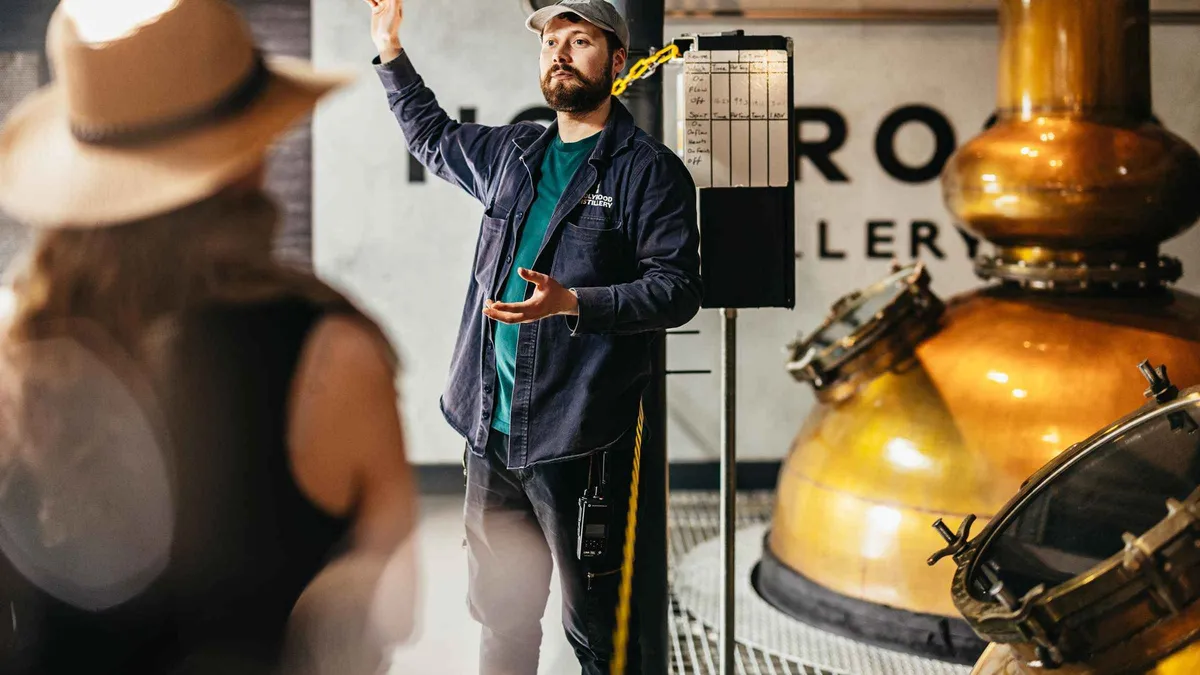 from £27
Edinburgh: Holyrood Distillery Whisky & Gin Tour
An hour inside a working city-centre distillery, covering both gin and single malt, with a welcome cocktail and tastings of each. The single-cask dram at the bar is an option add-on.
Check Availability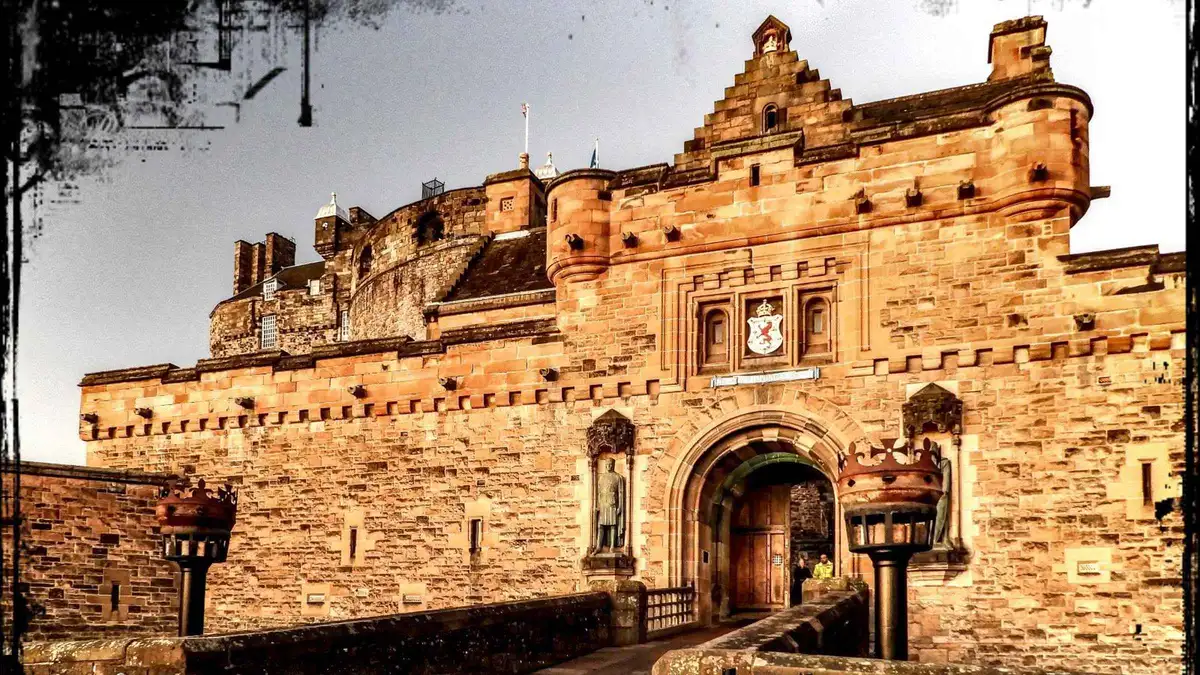 from £39
Edinburgh Castle: Guided Tour with Tickets Included
The only castle tour in this group marked wheelchair accessible, at 90 minutes with tickets included. English only, and you stay on afterwards until closing time to see the interiors.
Check Availability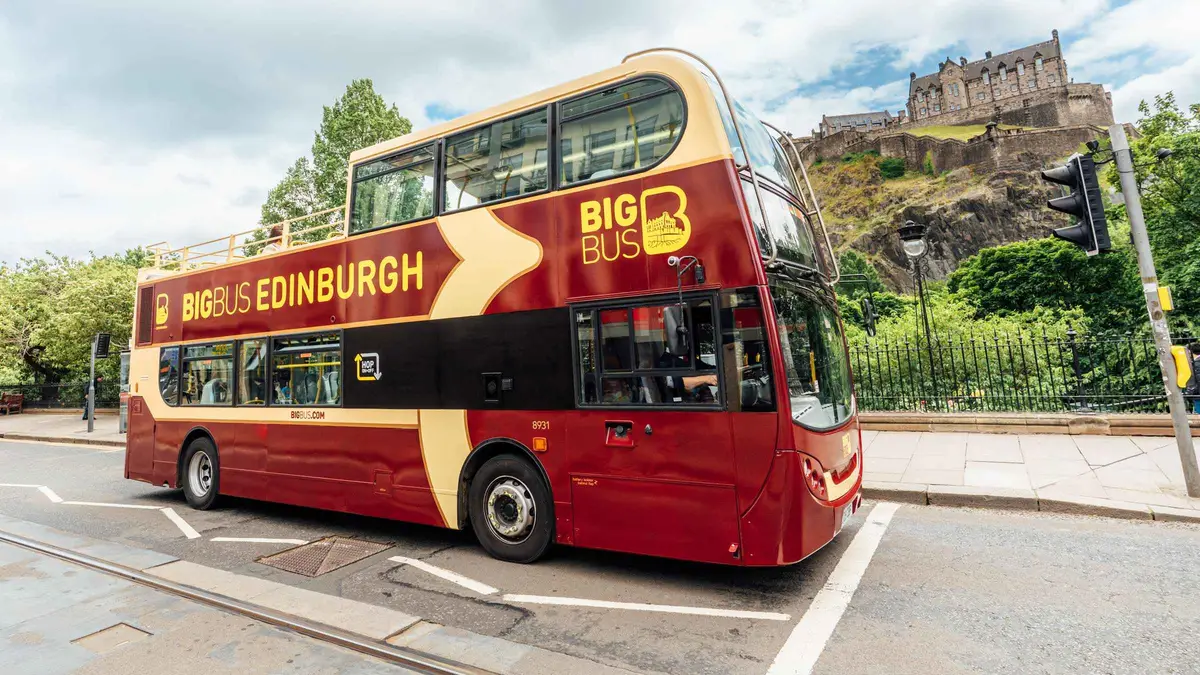 from £19.80
Edinburgh: Big Bus Hop-On, Hop-Off Tour by Open-Top Bus
Two routes across 15 City stops plus a Britannia loop, on a 24- or 48-hour ticket with an app for live bus tracking. Dogs are welcome, and it is the only bus ticket here that says so.
Check AvailabilityPrices, ratings and details are the platform's own. Pound figures are the listed prices. The platform bills in your account's currency.
The step-free map: where you can get in, and where you cannot
Ten venues plotted at their own front doors and coloured by what that venue publishes about getting inside, not by how good it is. Green means a level or lift route through the visit; red means the interior is stairs only or restricted. Positions are the entrances themselves, and the venue's own access page — linked from the table above — remains the source.
What to read next
Three pages that carry the practical layer this one depends on.
Getting around Edinburgh
What a journey costs, how the daily cap works and why paying the driver by card quietly costs more. The getting around page has the fare table this page deliberately does not repeat.
Fares and routesThe Old Town
The closes, the setts and the stairs that count as streets. If you want to know which routes off the Royal Mile are stepped before you commit to them, the Old Town guide is the map.
The steep halfRainy day Edinburgh
Wet setts are the worst surface in this city for wheels and sticks alike. The wet weather page is the list of places to spend a day indoors, and most of them are the same level, lift-served buildings named above.
Indoors, levelEdinburgh accessibility questions
Is Edinburgh wheelchair accessible?
In parts, and the parts are predictable. The New Town grid, Leith, the free national museums and the modern visitor buildings are level or lift-served; the Old Town ridge, its stepped closes and several historic interiors are not. Of the thirteen venues in the access table, seven publish a level or lift route through the whole visit and six publish stairs, restrictions or a single wheelchair space. Both the buses and the trams are wheelchair accessible, with the tram the easier boarding.
How do wheelchair users get up to the castle?
Across the esplanade — 110 metres of smooth tarmac at a five-degree gradient — then over a wooden-slatted bridge, and from the entrance a mobility vehicle runs to Crown Square on request, carrying three passengers plus one wheelchair user and taking a chair up to 103 cm high, 73.5 cm wide, 100 cm long and 150 kg. It does not run between 12:15 and 13:15. The usual exit is 70 stone steps, and staff will bring you back down the way you came instead. The castle section has the rest, and the ticket options are on their own page.
Which attractions in Edinburgh are step free inside?
By their own published wording: the National Museum of Scotland (lifts to all floors, free wheelchair loan, level access at the Tower Entrance), the Royal Yacht Britannia (lifts across five decks), Dynamic Earth ("all areas of our building are wheelchair accessible"), St Giles' Cathedral (two ramps, one main walkway), the Scotch Whisky Experience (lift access with a published access statement), Greyfriars Kirk (level access) and the City Art Centre (escalator and lift to all floors). The table sets each of them against the ones that are not.
Do carers get free entry in Edinburgh?
Almost everywhere, yes. Historic Environment Scotland admits up to two carers free per transaction and asks no proof of disability from the visitor; Holyroodhouse gives a free access-companion ticket; Camera Obscura, Dynamic Earth, the Real Mary King's Close, the Dungeon and the sightseeing buses all admit one free. The catch is booking: at the castle the carer ticket is added when you buy, and Military Tattoo accessible seating cannot be bought online at all. What each venue asks for is set out above.
Can I use the buses and trams with limited mobility?
Yes, and they are documented in unusual detail. Every tram is low-floored with level boarding from a ramped or lift-served platform, two wheelchair and buggy spaces in the middle carriage and alert buttons signposted in Braille; buses carry a driver-deployed ramp and a 0.75 m wheelchair space that a buggy must legally give up. Mobility scooters need a permit on the tram — Class 2, maximum 1200 mm by 700 mm — issued within 10 working days. The transport table has the details, and the fares are on the getting around page.
How this page was checked
Every access claim on this page comes from the venue's own accessibility page, read on 30 August 2026, and is quoted or closely paraphrased rather than summarised into something friendlier. Where a venue's site blocks automated requests — rct.uk and nts.org.uk both return 403 — the page was read in a real browser session the same day. Where a venue publishes nothing on a point, the word here is "not stated", and the gaps are listed in what nobody publishes.
We are an independent guide, not an access auditor: we have not measured a doorway or timed a lift, and nothing here is a survey. If one detail decides whether your visit works, ring the venue and treat what they tell you as better than anything written here. Provision also changes — the castle's entrance toilets were closed for refurbishment when we checked, and the Tattoo takes the accessible parking on the esplanade from May to October.
Accessible Edinburgh on film
Three visitors filming the routes rather than describing them — the surfaces, the ramps, the lifts and the places where a chair stops. Worth ten minutes before you book anything above.
Accessible Edinburgh: A Wheelchair User's Guide to Travel and Top Sights
A wheelchair user's route through the central sights, including the surfaces this page keeps warning about.
Video: Motab Lifestyle MagazineHow To Explore Edinburgh: A Disabled Traveller's Guide
The city seen from a seated eye level, with the gradients and the transport shown rather than summarised.
Video: Factory mmaTouring Edinburgh Castle (With a wheelchair and pushchair)
The castle route filmed with both a wheelchair and a pushchair, which is the clearest look at the cobbled climb described above.
Video: See Shaun VlogVideos load from YouTube only when you press play.
Prices, hours and terms are set by the venue or operator and confirmed at checkout.
We may earn a commission if you book through one of our links, at no extra cost to you. Full affiliate disclosure